 Domain SearchInstantly check and register your perfect .pk or international domain
 Web HostingGet a .pk domain for as low as PKR 467
 cPanel HostingUser-friendly hosting powered by cPanel
 Reseller HostingLaunch your own hosting business with minimal technical requirements
 Windows HostingOptimized for Windows-based applications and websites
 Affiliate ProgramEarn referral commissions by promoting our services
 WordPress HostingFast & Reliable WordPress Hosting
 Domain TransferMigrate your existing domain seamlessly with zero downtime.
 All DomainsAccess 324+ top-level domains (TLDs) worldwide from a single platform
 Whois LookupIdentify the owner of any domain using our whois and rdap lookup tool
 Managed VPS Hosting
 AI Website BuilderCreate beautiful websites effortlessly using intuitive drag-and-drop features
 Online ShopLaunch a professional online shop with no technical skills required
 BlogDiscover expert guides on hosting, websites, SEO, and digital growth strategies
 ContactGet instant assistance via live chat or email
 SupportAccess help articles, tutorials, and service documentation
 SSL CertificatesEncrypt data, build trust, and boost SEO.
You outgrew shared hosting. Your site slows down at peak hours. You can’t install the software your app needs. Sound familiar?
That’s the moment most people start asking: what is VPS hosting used for, and is it right for me?
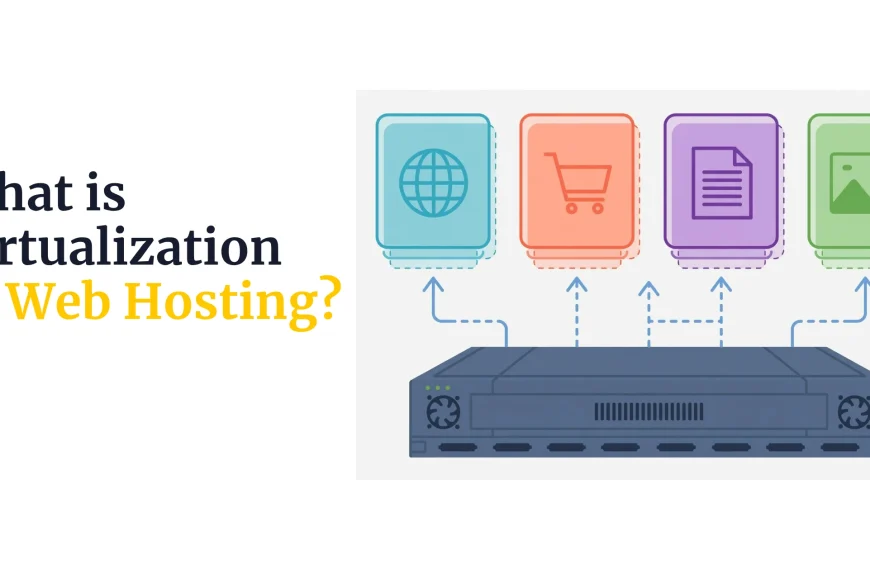
A VPS, or Virtual Private Server, splits one physical server into several isolated virtual machines.
“Virtual” means it’s software-based, not physical. “Private” means your resources are yours alone.
“Server” means it runs 24/7, ready to serve your site, app, or workload.
VPS hosting sits between two extremes. Shared hosting is cheap but limited.
Dedicated servers give you a whole physical machine but cost a lot more.
A VPS gives you dedicated CPU, RAM, and storage, plus root access, without the dedicated-server price tag.
That combination, dedicated resources, root access, and isolation from other users- is the core value of VPS hosting.
It’s also why the use cases stretch so far beyond “just hosting a website.”
Let’s walk through what VPS hosting is used for, section by section.
Main Uses for VPS Hosting
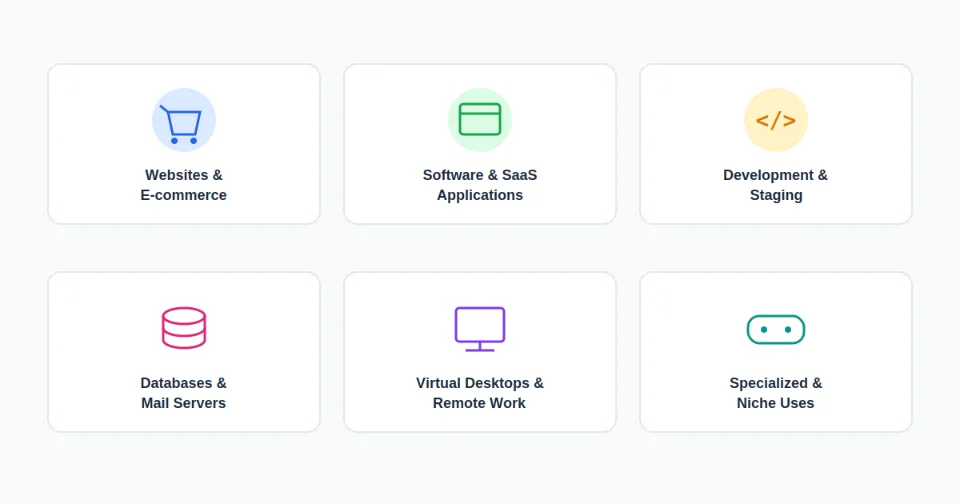
1) Websites & E-commerce
Growing blogs, corporate sites, and high-traffic content platforms hit a ceiling on shared hosting. A VPS removes that ceiling.
You get dedicated resources. Your traffic spike doesn’t compete with someone else’s traffic spike on the same server.
E-commerce stores feel this the most. WooCommerce, Magento, and custom cart platforms all need stable performance during checkout, especially during sales.
Example: WooCommerce alone powers roughly a third of all active e-commerce stores worldwide, with 4.53 million stores running on it. WooCommerce currently powers between 20.1% and 38.76% of all ecommerce websites worldwide, with StoreLeads tracking 4.53 million active WooCommerce stores. That’s a lot of checkout pages that can’t afford to slow down or crash during a flash sale.
A VPS also lets you host multiple sites on one server, with real resource isolation between them. One site’s traffic spike won’t drag down another.
Online retail in Pakistan is growing fast. Fashion, electronics, and groceries are leading the shift.
Example: Pakistan’s e-commerce market generated US$5.78 billion in 2025, growing 10-15% year over year, and electronics is the largest product category, contributing 23% of total e-commerce revenue.
If you’re selling to shoppers in Karachi, Lahore, or Islamabad, local data-center proximity is important. It cuts latency and speeds up load times for your customers. That’s what VPS hosting from Truehost is built for: dedicated resources close to your buyers.
2) Software Applications, Portals & SaaS
Custom web apps, APIs, CRM systems, and internal business portals all need more than shared hosting can give them.
Multi-tenant or SaaS-style platforms need specific server configuration. They also need reliable uptime, since downtime means angry customers.
Industry-specific business software often can’t run on shared hosting at all. It needs particular PHP versions, specific extensions, or custom firewall rules.
VoIP systems, IP PBX platforms, and call center software are common local use cases. Pakistan’s BPO industry is large and still growing.
3) Development, Testing & Staging
Every developer needs a sandbox. A VPS gives you one that behaves like production, because it can be your production environment’s twin.
You can test database changes, network configs, and new stacks without risking your live site.
Staging environments mirror production before go-live. CI/CD pipelines run smoother on dedicated resources.
Docker and other containerized workflows need consistent, isolated compute, not shared hosting’s unpredictable neighbors.
Automation tools also live here. Tools like n8n run scraping scripts or workflow automations 24/7.
n8n is an open-source workflow automation tool that connects apps, services, and APIs to create flexible, scalable workflows, and it’s designed to be self-hosted for full data control.
That’s a textbook VPS job: one process, running quietly, all day, every day.
Pakistan has a large freelance and dev-outsourcing workforce. Many use a VPS as an always-on personal or client project server.
Learning server administration is safer here too. You can break things on your own VPS without breaking anyone’s production site.
4) Databases & Mail Servers
Performance-sensitive apps need dedicated database hosting.
MySQL, PostgreSQL, MongoDB, Redis, all of them run better with dedicated resources instead of sharing a server with hundreds of strangers.
Private email servers give you full control. You set your own spam filtering rules.
You manage your own storage. You handle compliance your way, not your host’s way.
Running your own database and mail server also keeps sensitive internal data independent of third-party services.
Data residency is more important every year, especially for fintech and banking-adjacent apps that handle customer payment data.
Keeping that data on infrastructure you control, rather than a shared third-party pool, is often a compliance requirement, not just a preference.
5) Virtual Desktops & Remote Workspaces
A VPS can also act as your remote desktop.
That means:
- Remote access to heavy computing power from anywhere, on any device
- Secure, centralized access for distributed or remote teams
This is more useful as teams spread across cities and countries. A shared VPS-based workspace keeps everyone in the same environment, with the same tools, without shipping laptops around.
6) Specialized/Niche Uses
VPS hosting covers a long tail of specific, practical jobs:
- Game servers: Minecraft, CS2, Rust. Low latency and consistent resources are more important here than almost anywhere else.
- Self-hosted tools: private VPNs, file storage and collaboration platforms, password managers, media and streaming servers.
- AI agents: self-hosted AI frameworks that connect to WhatsApp or Telegram, monitor your inbox, or run scheduled tasks. Truehost’s own OpenClaw hosting is built for this: a pre-configured VPS that runs an autonomous AI agent around the clock, with root access and dedicated resources so it doesn’t compete with anyone else’s workload.
- Reseller hosting: agencies managing multiple isolated client sites from one server.
- Background automation: monitoring tools, backup jobs, always-on bots. Truehost’s N8n Hosting and AI Workers plans exist for this use case: workflows that need to run continuously without you babysitting a server.
Choosing How You Run Your VPS
Managed vs. unmanaged
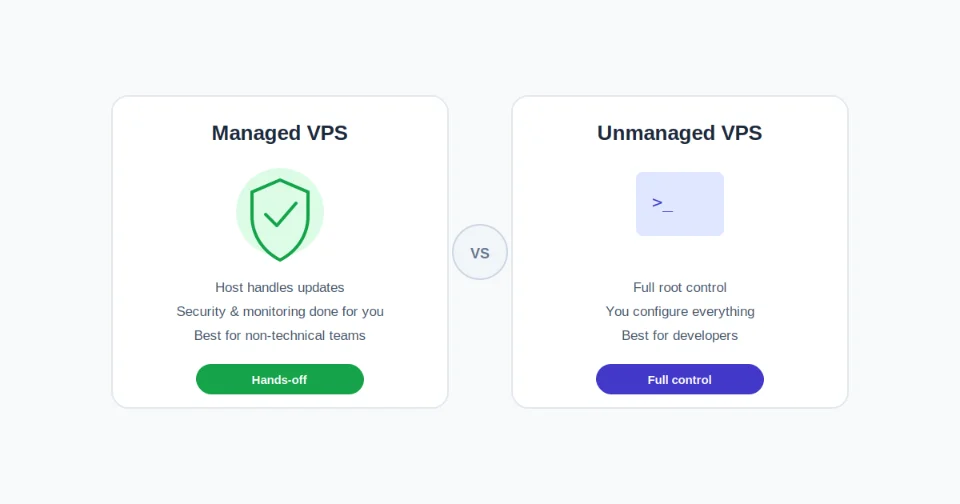
This is your first decision.
An unmanaged VPS gives you full control. You configure everything yourself — the OS, the software stack, security patches, monitoring. It suits developers who want that level of control.
Managed VPS means your host handles updates, security, and monitoring. It suits businesses without in-house technical staff.
If you don’t have a dedicated sysadmin, managed is almost always the safer starting point. Our managed VPS plans are made for this — you get the dedicated resources without needing to become a Linux expert overnight.
Linux vs. Windows
Your choice here comes down to your software stack, not personal preference.
Linux is cheaper and more flexible. It fits most web apps, e-commerce stores, and development environments.
Windows is required when your software demands it — mainly .NET applications or Windows-specific tools.
If you’re not sure which one your project needs, Linux is the safer default for most web and app hosting.
The common thread
Look back at every use case above. Websites, apps, dev environments, databases, remote desktops, game servers — they all rely on the same two mechanisms.
- Root access — you control the server, not just your account on it.
- Resource isolation — your CPU, RAM, and storage are yours, not shared with strangers.
Choosing managed vs. unmanaged, and Linux vs. Windows, is really about tuning those two things for your specific case. Everything else is a variation on that theme.
When VPS Is the Right Fit
Some signs you’ve outgrown shared hosting:
- Slow load times, even during normal traffic
- Hitting resource caps regularly
- Can’t install the software your project needs
- Growing security concerns about sharing a server with unrelated sites
VPS hosting is a good fit if you’re:
- Running a growing e-commerce store
- A developer or dev team
- An SME that needs more reliability and control
- An agency managing multiple client sites
- A VoIP or call center operator
- A freelancer running always-on client projects
It’s usually not necessary for very small static or brochure sites with minimal traffic. If your site gets a few hundred visitors a month and does nothing complex, shared hosting still does the job.
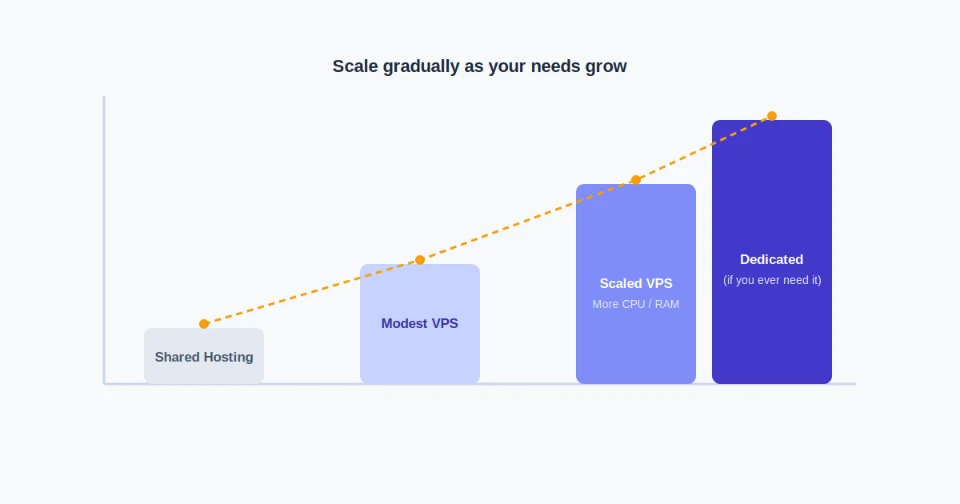
The growth path: start with a modest VPS plan. Scale CPU, RAM, and storage as your needs grow. You don’t need to jump straight to a dedicated server, a VPS scales with you for a long time before that becomes necessary.
Get VPS Hosting with Truehost
So, what is VPS hosting used for? In short: dedicated resources, root control, and real isolation, across websites, apps, development environments, databases, remote work setups, and specialized tools like AI agents and automation bots.
That flexibility is the win. You get the control of a dedicated server without paying dedicated-server prices, and you can scale up gradually as your project grows.
If you’re ready to move off shared hosting, check out Truehost Pakistan’s VPS hosting plans.
If you’re not technical, ask about our managed option, we handle the server side, so you can focus on your site, your app, or your business.