 Domain SearchInstantly check and register your perfect .pk or international domain
 Web HostingGet a .pk domain for as low as PKR 467
 cPanel HostingUser-friendly hosting powered by cPanel
 Reseller HostingLaunch your own hosting business with minimal technical requirements
 Windows HostingOptimized for Windows-based applications and websites
 Affiliate ProgramEarn referral commissions by promoting our services
 WordPress HostingFast & Reliable WordPress Hosting
 Domain TransferMigrate your existing domain seamlessly with zero downtime.
 All DomainsAccess 324+ top-level domains (TLDs) worldwide from a single platform
 Whois LookupIdentify the owner of any domain using our whois and rdap lookup tool
 Managed VPS Hosting
 AI Website BuilderCreate beautiful websites effortlessly using intuitive drag-and-drop features
 Online ShopLaunch a professional online shop with no technical skills required
 BlogDiscover expert guides on hosting, websites, SEO, and digital growth strategies
 ContactGet instant assistance via live chat or email
 SupportAccess help articles, tutorials, and service documentation
 SSL CertificatesEncrypt data, build trust, and boost SEO.
An online store can have great products, an attractive design, and strong marketing, yet still lose customers because pages load slowly, the website goes down, or checkout fails.
Your hosting supports the infrastructure behind your storefront, product catalog, customer data, and payment process. When that infrastructure cannot keep up, customers may struggle to browse products, complete payments, or return to your store.
So, ecommerce hosting needs more than basic storage and bandwidth. You need a hosting environment that supports performance, security, growth, software compatibility, and the needs of your target customers.
Let’s look at the nine hosting features ecommerce stores should evaluate before choosing a website hosting plan in Pakistan.
1) Performance and Speed
An ecommerce store needs fast, consistent performance because every extra delay can affect the shopping experience, conversions, and search visibility.
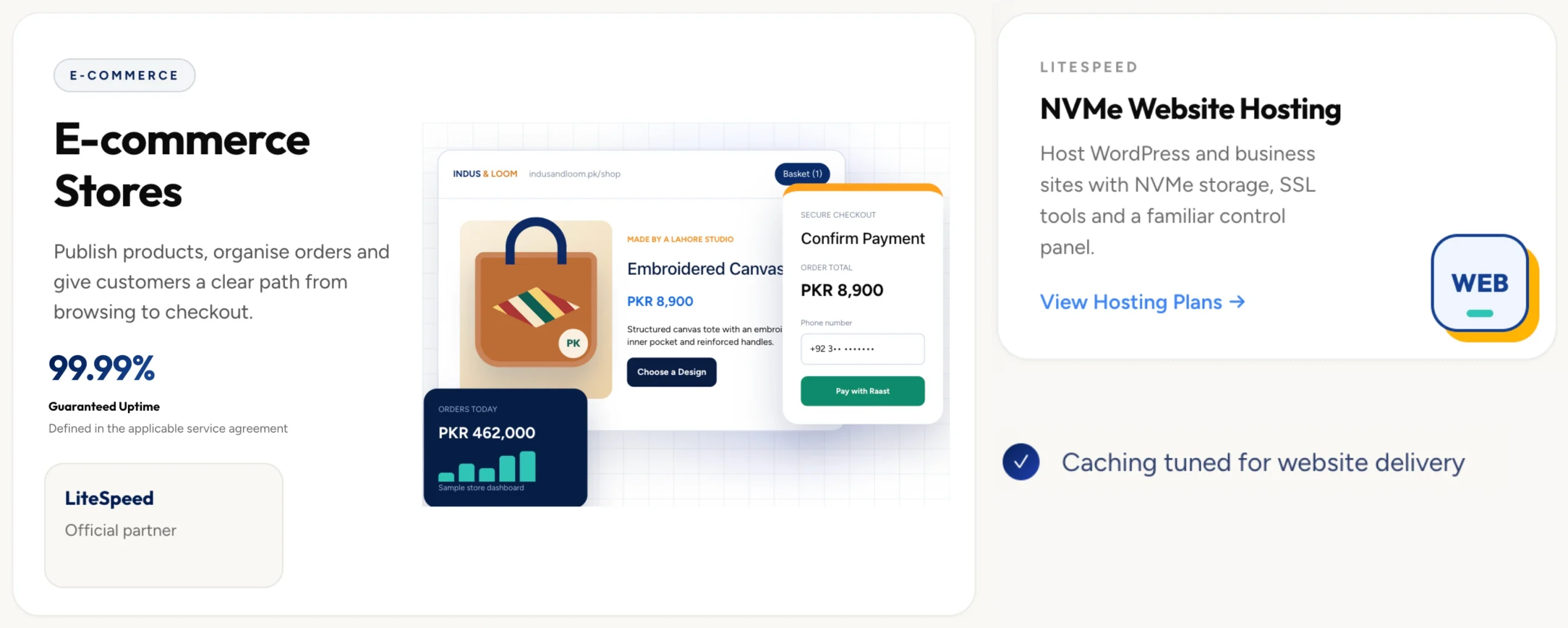
Your hosting infrastructure contributes to website performance through several components.
- SSD or NVMe storage can improve read and write operations compared with traditional HDD storage.
- Caching reduces repeated processing by storing certain resources or previously generated content.
- A CDN (Content Delivery Network) can serve static files, such as product images, scripts, and stylesheets, from servers closer to visitors.
- Modern HTTP protocols, including HTTP/2 and HTTP/3, can improve how website resources are delivered. HTTP/2 supports multiple requests over a connection, while HTTP/3 uses QUIC and may perform better under certain network conditions.
- Look for a hosting provider with a 99.9% or higher uptime target. A 99.9% uptime figure allows approximately 8 hours and 46 minutes of downtime per year, although actual downtime depends on the provider’s performance and service terms.
A three-second page-load benchmark is a useful performance warning point, but your goal should be consistent speed across product pages, carts, and checkout.
At Truehost, our hosting plans use SSD-based infrastructure and LiteSpeed web server technology.
Depending on the plan and configuration, these features can support the delivery of product pages, images, scripts, carts, and other website resources. Check the specifications of your selected plan before purchasing.
2) Scalable Bandwidth and Server Resources
A fast server can still struggle when a store runs out of available resources.
Imagine running a promotional campaign that brings hundreds of additional shoppers to your website. Each visitor may load images, query the product database, use filters, or add items to a cart. These activities consume server resources.
Your hosting plan needs enough capacity for regular traffic and periods of higher demand.
CPU and RAM influence how much work your server can handle at the same time.
- CPU: Processes website requests, application tasks, and other operations.
- RAM: Provides temporary working memory for running applications and processes.
- Storage: Holds your website files, databases, images, and other data.
An ecommerce store with many products, plugins, concurrent shoppers, and database queries may require more resources than a simple business website.
Bandwidth is also important because product images, website files, and customer requests consume data transfer. Some providers set specific bandwidth limits, while others advertise unmetered or unlimited bandwidth under acceptable-use policies.
Before choosing a plan, check:
- If the provider sets a bandwidth ceiling.
- How traffic usage is calculated.
- What happens when your account reaches its limit.
- If additional charges, throttling, or an upgrade may apply.
This information helps you plan for traffic without unexpected restrictions.
Shared hosting places multiple websites on one server, VPS hosting generally provides a more defined resource allocation and greater configuration control, and cloud hosting may offer flexible scaling depending on its architecture and plan.
An unlimited storage or bandwidth claim does not mean your account has infinite access to server capacity.
Providers may apply fair-use rules, resource limits, inode restrictions, CPU or RAM limits, and other terms. So, read the hosting provider’s resource policy before relying on an unlimited claim.
Also, plan your resources based on your current website needs like product images, traffic, orders, plugins, database usage, and seasonal demand and then upgrade as you grow.
3) Security and Data Protection
Ecommerce stores collect customer information, process orders, and connect to payment services. Hosting security should therefore be part of your purchasing decision from the start.

A hosting provider cannot guarantee that a website will never be compromised, but the right security features can help reduce risks and support recovery when problems occur.
An SSL/TLS certificate enables encrypted communication between your website and customers, supports HTTPS, and helps establish browser trust. HTTPS is essential for ecommerce, especially on payment-related pages, although it does not guarantee complete website security.
Look for DDoS protection to help reduce the impact of traffic-flooding attacks, along with malware scanning and removal services where available.
Malware scanning can identify suspicious files or malicious code, while removal assistance can help address compromised websites.
Automated backups provide a recovery point if a plugin update fails, a database becomes corrupted, or files are accidentally deleted. Check the backup frequency, retention period, storage location, and restoration process.
Backups should cover essential information such as:
- Product catalog
- Orders
- Database
- Website configuration
Your hosting account controls access to important website resources. Look for security features such as two-factor authentication, strong password requirements, access controls, and security notifications where available.
Protecting your hosting account is just as important as securing the website itself.
At Truehost, our hosting plans include free SSL and daily backups. Review the backup terms and security features of your chosen plan to confirm what is included.
4) Payment Gateway Support
Getting customers to your checkout page is only part of the process. You also need a payment system that works properly with your website.
Your hosting environment provides the space where your ecommerce platform and payment plugins run. The payment gateway, on the other hand, generally handles transaction processing and communication with its payment systems.
For a store in Pakistan, you may want to support local payment options such as JazzCash and Easypaisa, alongside card processors and other payment services. The right choice depends on your business, customer preferences, and the gateways available to you.
Before purchasing hosting, check if your preferred gateway supports your ecommerce platform and if its plugin has specific technical requirements.
Your hosting should support the necessary PHP versions, database configuration, and compatible plugins.
Secure HTTPS communication is essential for payment-related pages. Server security settings, including firewall rules, should allow legitimate gateway API requests and callbacks without unnecessarily weakening protection.
Some gateways send notifications to your website after a transaction. Make sure your server can receive the required callbacks or webhooks according to the gateway’s technical instructions.
Before launching your store, test the payment process. Verify successful and failed transactions, order status updates, customer confirmations, and the handling of unpaid or cancelled orders.
A payment plugin working on your website does not replace the gateway’s own approval and security requirements.
5) Scalability for Traffic and Business Growth
Your hosting plan should accommodate growth without forcing you to rebuild or move your entire store to another provider.
As your business expands, you may add more products, attract additional visitors, handle larger order volumes, or serve more simultaneous shoppers. Promotional campaigns and flash sales can also create temporary traffic increases.
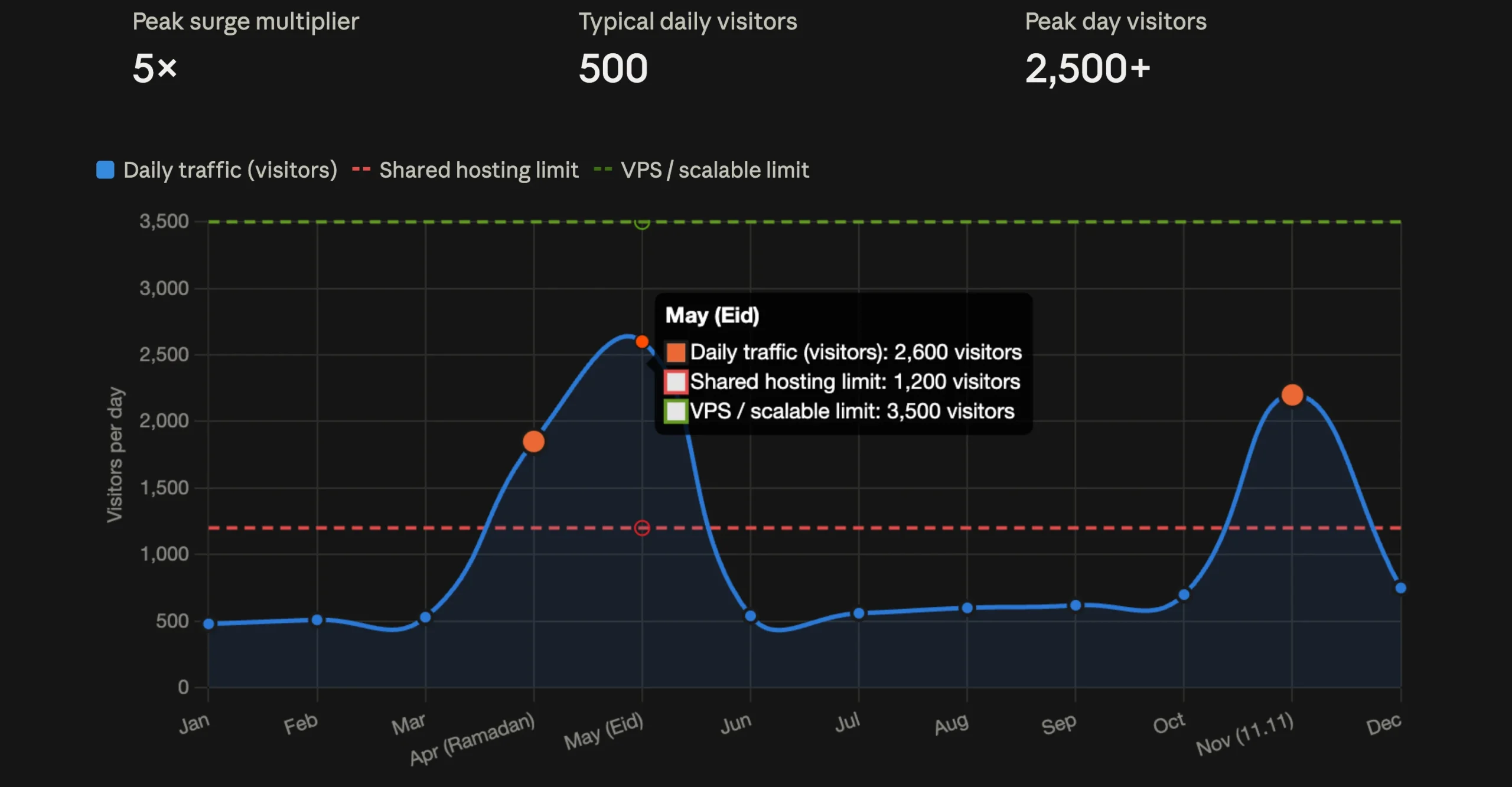
Pakistani shopping periods such as Ramadan, Eid, and 11.11 sales may bring higher demand. A plan that performs well during ordinary traffic can struggle when thousands of shoppers visit within a short period.
Review your available CPU, RAM, storage, bandwidth, and other resource limits.
Having sufficient headroom can help your store handle higher demand, although no hosting plan guarantees uninterrupted performance during every traffic spike.
A clear upgrade path allows you to increase resources as your business develops. Check if you can move from a starter plan to a higher-tier option without migrating your entire website, losing data, or experiencing unexpected downtime.
6) Ecommerce Platform and Software Compatibility
Before choosing hosting, you need to know which software will power your store.
A hosting plan may offer impressive performance features, but if it doesn’t support your ecommerce platform or its requirements, you’ll run into problems during installation or daily management.
WooCommerce, for example, runs on WordPress and relies on technologies such as PHP and MySQL or MariaDB. It is an option for Pakistani store owners who want to build an ecommerce website using WordPress.
Other platforms include:
- OpenCart
- Magento
- PrestaShop
Each has its own requirements, so check the documentation for the software you plan to use before making a purchase.
PHP version selection is another useful feature. Your themes, plugins, and ecommerce applications may require specific PHP versions.
A hosting control panel that allows you to review or update supported versions can make compatibility management easier. Test your software before changing the PHP version on a live store.
You should also consider database support and performance. Your store’s database holds information about products, customers, orders, and settings. As that information grows, database queries can place additional demands on your server.
For beginners, a one-click installer can simplify the setup process for WordPress, WooCommerce, or other supported applications. However, you may still need to complete additional configuration after installation.
At Truehost, our ecommerce-compatible hosting features include cPanel, one-click WordPress and WooCommerce installation, PHP version selection, and MySQL database support, depending on the plan.
Review the current specifications to confirm the features included in your chosen package.
7) Control Panel and Ease of Management
Running an ecommerce store involves more than adding products and waiting for orders.
You may need to manage files, databases, email accounts, SSL settings, or PHP versions. A practical control panel can help you perform these tasks without depending on a developer every time you need to make a routine change.
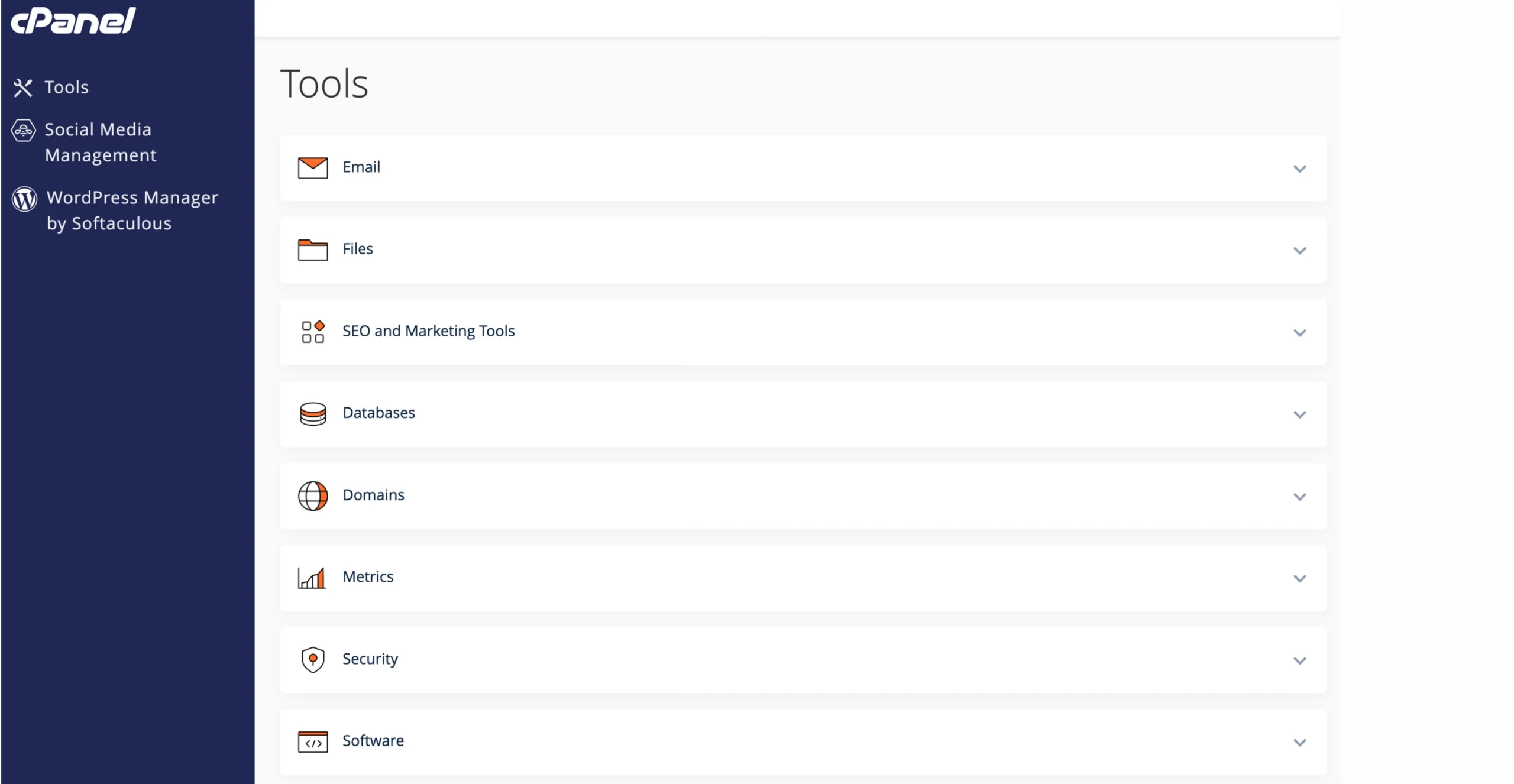
cPanel provides a graphical interface for managing various hosting functions. Depending on your plan and account permissions, you can use it to manage different website management tasks.
Look for a hosting environment that allows you to review certificate settings, manage supported PHP versions, and configure scheduled tasks such as cron jobs.
Cron jobs can support automated processes, maintenance activities, and certain ecommerce-related tasks.
A staging environment is also helpful if you want to test theme changes, plugin updates, or other modifications before applying them to your live store. This is particularly useful when your website handles customer orders.
Check if staging is included in your plan or requires a separate setup.
Finally, consider how easy it is to find instructions and manage your hosting account. Clear interfaces and accessible documentation can save you time when you’re handling routine website tasks yourself.
8) Customer Support and Technical Assistance
Ecommerce problems can happen at inconvenient times.
A website may go down during a promotional campaign, checkout may stop working, or a server configuration change may cause an error. In these situations, access to responsive technical support can be important.
Start by checking the provider’s support availability and communication channels. These may include live chat, email tickets, or phone support, depending on the provider.
Confirm if support is available outside regular business hours and if 24/7 assistance is offered.
For store owners in Pakistan, support that operates in a similar time zone may make communication easier. Still, the location of the support team does not guarantee faster resolution, so check the provider’s actual service commitments.
Ask about response-time expectations for urgent issues, such as payment disruptions and downtime, compared with routine questions. Also, check if support covers server configuration, software compatibility, hosting-related errors, and performance concerns.
Your hosting provider may not be responsible for every third-party plugin or payment gateway.
Read the support policy so you know which problems the provider can assist with and which require the software vendor’s support team.
9) Regional Performance and Pakistan-Specific Infrastructure
If your ecommerce store serves customers in Pakistan, your hosting decision should account for their location, language preferences, payment requirements, and network conditions.
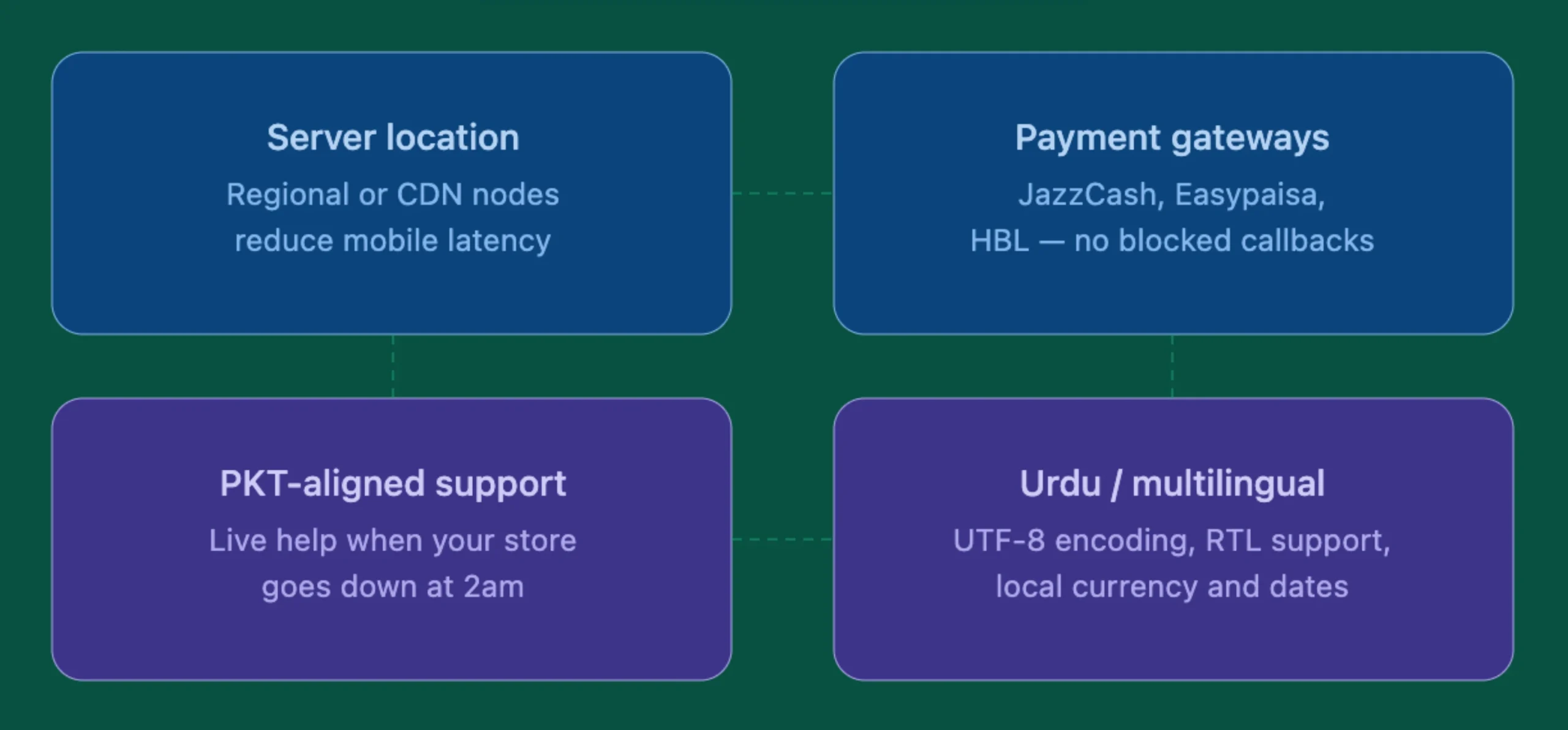
Let’s begin with server location.
The physical distance between your server and a visitor can affect network latency. A closer server may reduce the distance data travels, but location alone doesn’t determine website speed.
Network routing, connectivity, congestion, and server performance also contribute.
A CDN may help deliver static content to customers in different regions, so consider the infrastructure and delivery options available through your provider. Where possible, test your website from locations relevant to your target customers.
Your store may also serve customers in Urdu or multiple languages. In that case, check if your hosting environment supports the encoding, databases, and applications required for multilingual websites.
UTF-8 encoding is commonly used for multilingual content, but your ecommerce platform, theme, and database must be configured properly.
Don’t forget other localization requirements.
Your store may need to display prices in the appropriate currency, support language preferences, handle date formats, and work with payment solutions available to your target market.
Your Store Deserves Hosting That Works as Hard as You Do
Choosing ecommerce hosting means looking beyond storage space and the monthly price. Your store needs an environment that supports its daily operations, protects customer information, and provides room for growth.
Your hosting plan should align with your store’s product catalog, expected traffic, payment integrations, software, and customer base.
At Truehost, our hosting plans offer features such as SSD-based infrastructure, LiteSpeed technology, cPanel, free SSL, and daily backups, depending on the selected package.
Review the plan specifications to find an option that fits your requirements.
Start with ₨282.65 /month or view our other hosting plans to choose one that suits your store’s specific needs and growth stage.