 Domain SearchInstantly check and register your perfect .pk or international domain
 Web HostingGet a .pk domain for as low as PKR 467
 cPanel HostingUser-friendly hosting powered by cPanel
 Reseller HostingLaunch your own hosting business with minimal technical requirements
 Windows HostingOptimized for Windows-based applications and websites
 Affiliate ProgramEarn referral commissions by promoting our services
 WordPress HostingFast & Reliable WordPress Hosting
 Domain TransferMigrate your existing domain seamlessly with zero downtime.
 All DomainsAccess 324+ top-level domains (TLDs) worldwide from a single platform
 Whois LookupIdentify the owner of any domain using our whois and rdap lookup tool
 Managed VPS Hosting
 AI Website BuilderCreate beautiful websites effortlessly using intuitive drag-and-drop features
 Online ShopLaunch a professional online shop with no technical skills required
 BlogDiscover expert guides on hosting, websites, SEO, and digital growth strategies
 ContactGet instant assistance via live chat or email
 SupportAccess help articles, tutorials, and service documentation
 SSL CertificatesEncrypt data, build trust, and boost SEO.
When you sign up for a hosting plan, you’ll see bandwidth mentioned everywhere. It’s one of those terms that sounds simple until you start comparing plans and realize every host describes it differently.
Bandwidth is the amount of data your website transfers to visitors.
Every time someone loads a page, views an image, or downloads a file, that counts. If you run out, your site slows down or goes offline entirely.
So how much do you need? That depends on your traffic, your content, and how your host measures usage.
A simple blog might use a few gigabytes per month while a busy store with lots of images could burn through hundreds.
The tricky part is that bandwidth doesn’t mean the same thing across every hosting plan. Some hosts cap it, some don’t track it, and some promise “unlimited” but attach quiet restrictions.
Knowing the different types of bandwidths in web hosting saves you from surprise fees or a site that crashes when you need it most.
8 Types of Bandwidths You Should Know
| Bandwidth Type | Best for |
| Unmetered | Sites with steady, predictable traffic that want no usage tracking or overage worries |
| Metered | Budget-conscious sites with low/predictable traffic that want usage visibility and control |
| Unlimited | Small blogs & portfolios |
| Burstable | Flash sales & holiday spikes |
| Shared | Entry-level shared hosting |
| Dedicated | Enterprise & dedicated servers |
| Guaranteed | SLA-critical sites (finance/medical) |
| Allocated bandwidth | Light to moderate traffic sites |
1) Unmetered Bandwidth
Unmetered bandwidth means your host doesn’t cap how much data you can transfer each month.
You won’t get billed based on gigabytes used, and you won’t hit a hard wall that shuts your site down.
But unmetered doesn’t mean infinite.
Your connection speed is still limited. If your site gets a massive traffic surge, the port speed becomes the bottleneck.
Your host might also have fair use policies that kick in if you’re consuming far more resources than typical accounts.
This setup works well for sites with steady traffic that want predictable bills. You’re not watching a usage meter every day, and you’re not worried about overage charges at month’s end.
2) Metered Bandwidth
Metered bandwidth gives you a specific allowance, usually measured in gigabytes or terabytes per month.
This way, you know how much you have, and your control panel shows how much you’ve used.
If you go over, you either pay extra or your host throttles your speed until the next billing cycle.
Some hosts charge reasonable overage fees; however, others charge rates that make you wish you’d upgraded sooner.
Metered plans are usually cheaper upfront. If you run a small site with predictable traffic, you’ll probably never hit the limit.
The visibility alone is useful; you can see your usage trends and upgrade before you run into problems.
3) Unlimited Bandwidth
While no server has truly infinite capacity, what hosts mean is that for normal website use, they won’t cut you off or charge you extra based on data transfer.
The catch is in the fair use policy. If your site starts consuming server resources at a level that affects other customers, the host can step in.
That might mean asking you to upgrade, throttling your speed, or in extreme cases, suspending your account.
For a small blog, a portfolio, or a basic business site, unlimited is fine. You’ll never come close to whatever invisible ceiling exists.
The problems start when you’re running something resource-intensive and expecting the same freedom.
4) Burstable Bandwidth
Burstable bandwidth lets you exceed your normal limit for short periods. You have a baseline, say 100 Mbps.
When traffic spikes, you can temporarily use much more, maybe up to 500 Mbps, without immediately getting cut off.
This is built for moments like a flash sale, a viral post, or a holiday promotion.
Your site handles the surge without crashing, and you don’t have to pay for a higher tier year-round just to survive three busy days.
The catch is how hosts bill for bursts. Many use a 95th percentile method.
They discard your top 5% of usage readings and bill based on the rest. Short bursts often cost nothing extra.
But if you’re bursting constantly, you’ll end up paying overage fees that make a higher base plan look cheaper.
5) Shared Bandwidth
Shared bandwidth means you’re using the same network capacity as other websites on the same server.
It’s the standard setup for budget hosting. Your site and dozens or hundreds of others pull from the same pool.
When everyone’s traffic is low, shared bandwidth works fine. Your pages load quickly, and nobody notices. The problems show up during peak hours.
If several sites on the server are busy at the same time, everyone’s performance dips. Your site might slow down because someone else’s site is getting hammered.
This is the tradeoff you accept with cheap hosting. It’s usually fine for small sites with modest traffic. But becomes frustrating when your site grows, and you’re competing for resources you can’t control.
6) Dedicated Bandwidth
Dedicated bandwidth is reserved for you alone. The capacity is yours. If you’re allocated 100 Mbps, you get 100 Mbps regardless of whether other servers in the data center are busy or idle.
There’s no sharing, no competing, no surprise slowdowns because someone else’s site went viral. The performance is consistent and predictable.
This is what you get with dedicated servers, higher-tier VPS hosting, and enterprise-level plans.
You pay more for it. But if your site or application depends on reliable speed, the cost is worth it.
Financial platforms, video streaming services, and high-traffic eCommerce stores can’t afford the variability that comes with shared bandwidth.
7) Guaranteed Bandwidth
Guaranteed bandwidth is a contractual promise; your host commits to delivering a specific amount of bandwidth, and if they fail, you have recourse.
This usually comes with a service level agreement (SLA) that spells out the exact terms.
The difference between dedicated and guaranteed mostly comes down to accountability. Dedicated means the resources are reserved for you.
Guaranteed means there’s a written commitment with consequences if the host doesn’t deliver.
It’s ideal for Healthcare platforms handling patient data, financial services processing transactions, and any site where milliseconds affect revenue and needs this level of assurance.
The SLA gives you something to point to if performance falls short.
8) Allocated Bandwidth
Allocated bandwidth is a set amount assigned to your account, but it’s not necessarily dedicated to you alone. Think of it as a reserved portion of a shared pool.
Your plan includes a number, but actual performance depends on how the host manages the overall allocation.
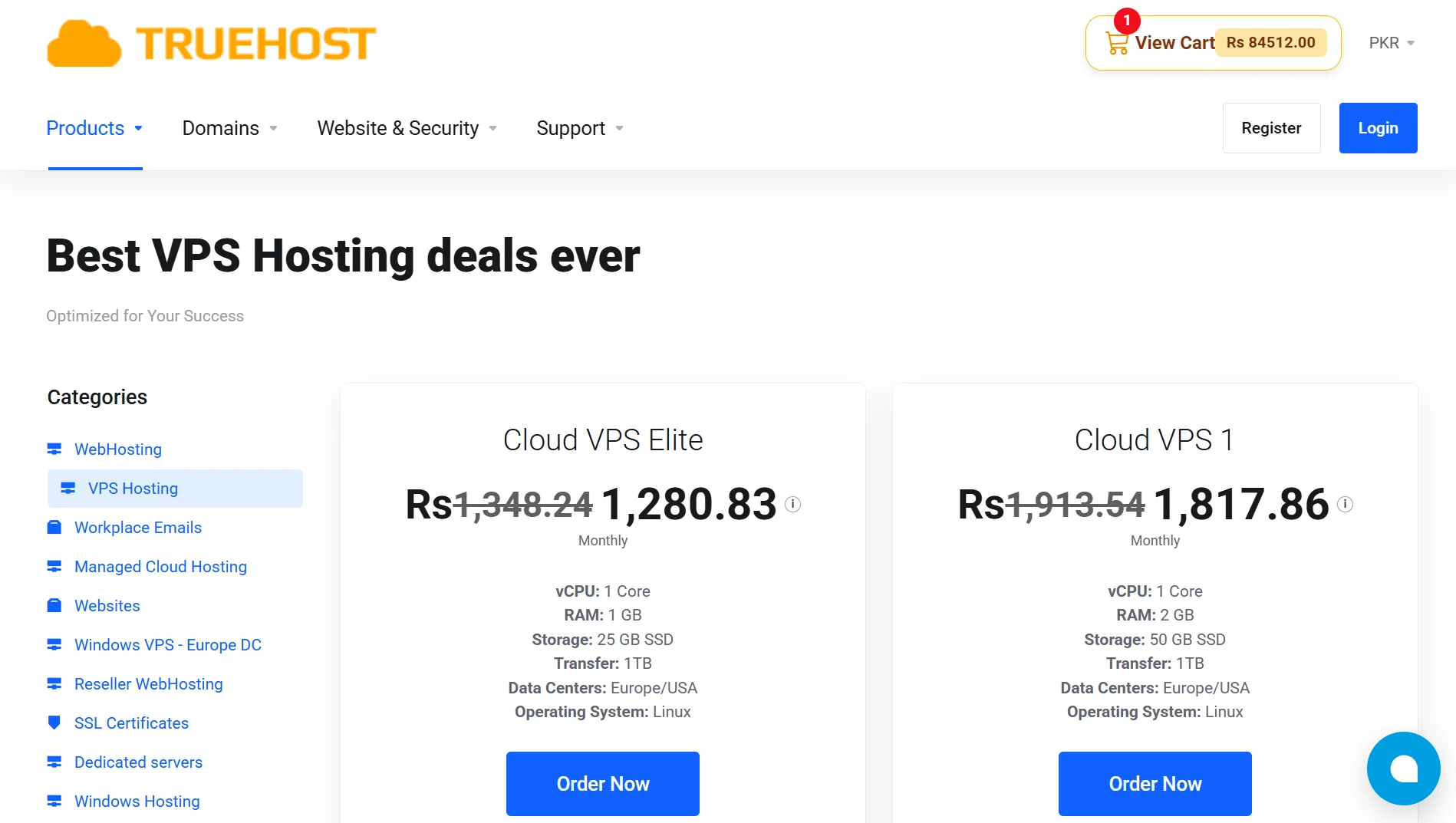
This is common with VPS hosting and some cloud plans. You’re told you have, say, 2 TB of transfer per month.
But how fast you can transfer it depends on network conditions and how other accounts on the same infrastructure are behaving.
It’s a middle ground; you get more clarity than pure shared hosting, but you don’t get the isolation of dedicated bandwidth.
For light-to-moderate traffic sites, it’s usually enough.
Factors To Consider When Choosing Bandwidth
- Traffic volume: Check your actual visitor numbers, especially during peak days. More visitors mean more data transferred.
- File size: Images, videos, and downloads use bandwidth quickly. Heavy pages need more capacity than text-based ones.
- Geographic reach: A global audience puts more strain on your network. Local hosts may offer faster speeds for regional visitors.
- Traffic pattern: Steady traffic suits unmetered plans. Spiky traffic from sales or viral moments needs burstable or dedicated bandwidth.
- Budget: Cheaper plans usually mean metered or shared bandwidth. Balance what you can afford against the risk of slowdowns.
- Growth potential: Your needs will change. Pick a host that lets you upgrade easily when traffic grows.
- Host’s fair use policy: Read the fine print, check if “Unlimited” and “unmetered” both have limits hidden in the terms.
Types of Bandwidths FAQs
Is 10 GB bandwidth enough for a website?
For a small blog or a simple brochure site, 10 GB is often plenty. But if you have high-resolution images, videos, or a few thousand visitors per month, you’ll burn through 10 GB faster than you expect. Check your page sizes and traffic numbers before assuming it’s enough.
Is increasing bandwidth good?
More bandwidth gives you more headroom. Your site can handle more visitors without slowing down. It can serve larger files without hitting limits. But if you’re already on a plan that meets your needs comfortably, paying for more might not be worth it.
Do I need dedicated bandwidth for a small site?
Small sites with modest traffic do fine on shared or unmetered bandwidth. Dedicated bandwidth makes sense when you have consistent high traffic, performance-critical applications, or an SLA that requires guaranteed speeds. For a personal blog or a small business site, it’s overkill.
Is “unlimited” bandwidth really unlimited?
It’s unlimited within fair use. The host won’t cut you off based on gigabytes transferred, but they can throttle your speed, ask you to upgrade, or suspend your account if your usage affects other customers. Ensure you read the terms.
What makes bandwidth low?
Too many visitors at once and large files that eat up transfer capacity quickly. Also, a shared server where other sites are competing for the same resources. Slow port speeds on your hosting plan. A network issue at your host. Or simply exceeding a metered allowance and getting throttled.
Get Unlimited Bandwidth With Truehost
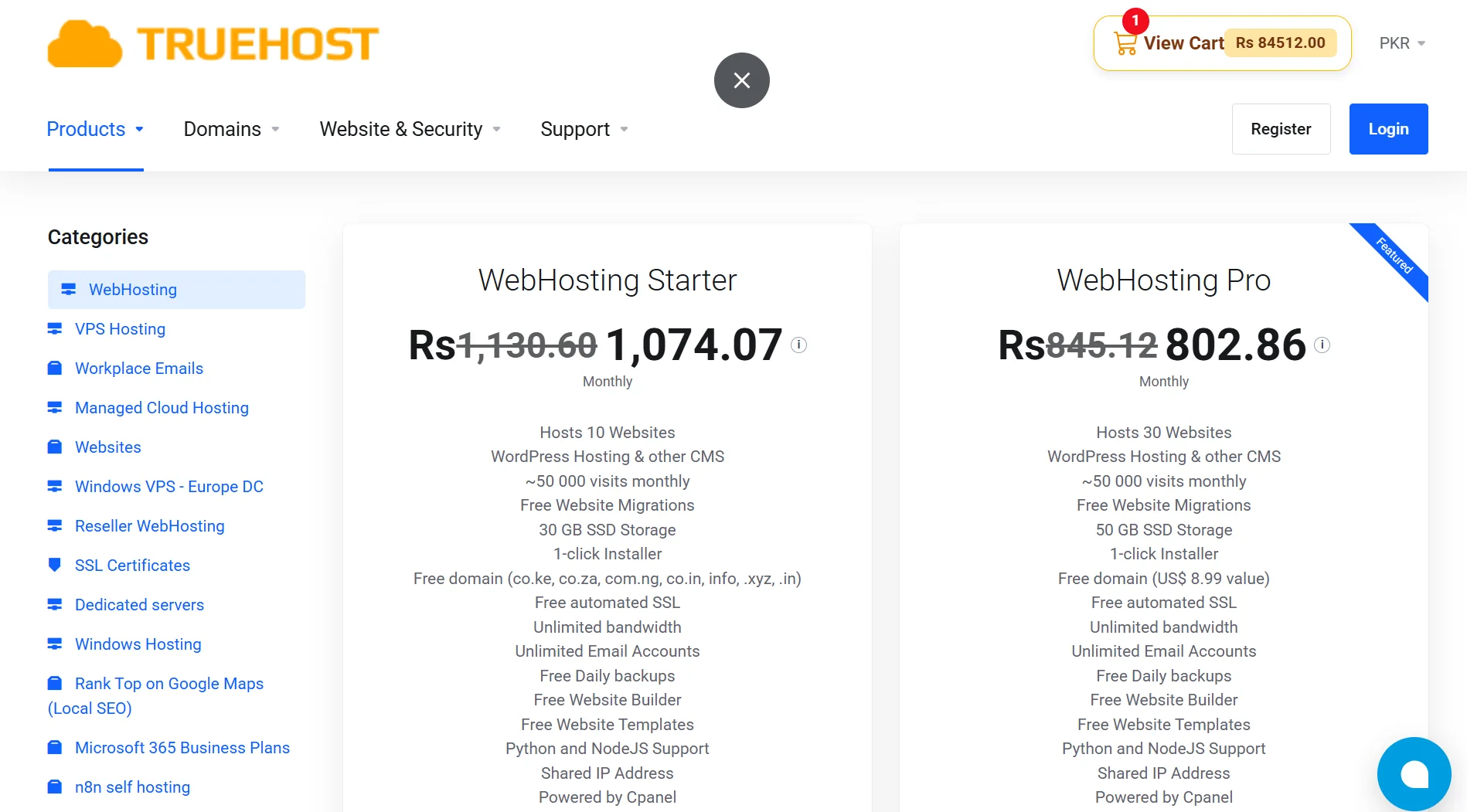
If you want hosting that doesn’t make you count gigabytes, we’ve got you covered. Every Truehost plan includes unlimited bandwidth, so your site can grow without you watching a usage meter.
Our Starter plan is ₨282.65 per month. It’s built for new websites, portfolios, and blogs that need room to breathe.
The Pro plan at ₨296.78 per month handles small businesses and growing sites with more storage and more capacity.
And if you’re running an agency, an eCommerce store, or anything that needs serious resources, our Unlimited plan at ₨4,149.77 per month gives you unlimited SSD storage, unlimited bandwidth, and the freedom to host as many domains as you need.
Every plan includes free SSL certificates, daily backups, and cPanel. You can launch within minutes.