 Domain SearchInstantly check and register your perfect .pk or international domain
 Web HostingGet a .pk domain for as low as PKR 467
 cPanel HostingUser-friendly hosting powered by cPanel
 Reseller HostingLaunch your own hosting business with minimal technical requirements
 Windows HostingOptimized for Windows-based applications and websites
 Affiliate ProgramEarn referral commissions by promoting our services
 WordPress HostingFast & Reliable WordPress Hosting
 Domain TransferMigrate your existing domain seamlessly with zero downtime.
 All DomainsAccess 324+ top-level domains (TLDs) worldwide from a single platform
 Whois LookupIdentify the owner of any domain using our whois and rdap lookup tool
 Managed VPS Hosting
 AI Website BuilderCreate beautiful websites effortlessly using intuitive drag-and-drop features
 Online ShopLaunch a professional online shop with no technical skills required
 BlogDiscover expert guides on hosting, websites, SEO, and digital growth strategies
 ContactGet instant assistance via live chat or email
 SupportAccess help articles, tutorials, and service documentation
 SSL CertificatesEncrypt data, build trust, and boost SEO.
VPS hosting gives your website its own allocated slice of server resources (CPU, RAM, and storage) without requiring you to rent an entire physical server. It sits in an isolated virtual environment on shared hardware, which generally gives you more control, more predictable performance, and more flexibility than traditional shared hosting.
This setup makes VPS hosting a common next step for growing websites, online stores, applications, and businesses that have started to outgrow shared hosting. That said, VPS hosting is not automatically the right choice for every website. Before deciding, it helps to look at your actual traffic, resource requirements, technical needs, budget, how much server control you want, and how much server management you’re willing to take on yourself.
Already fairly sure VPS is the right move? Compare VPS Hosting Plans with Truehost Pakistan
7 Key Benefits of VPS Hosting for Your Website
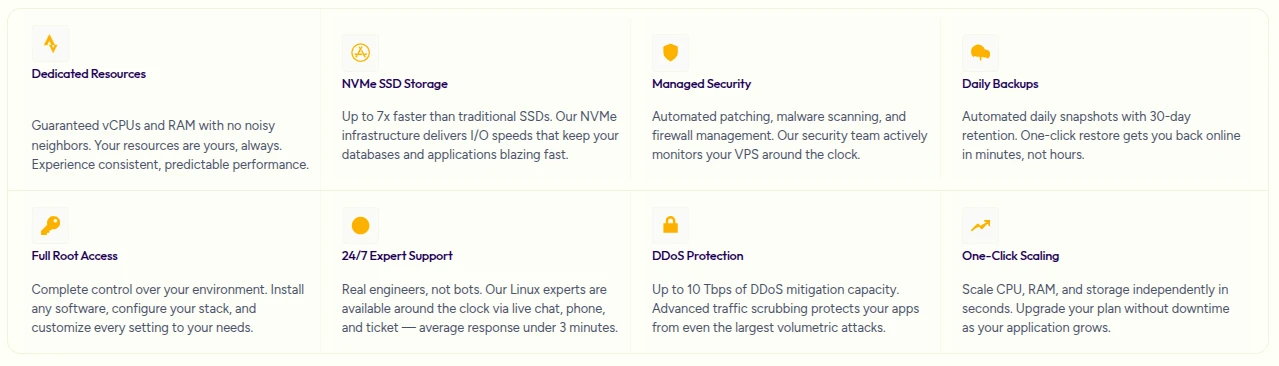
Here are the seven practical benefits of VPS hosting worth understanding before you upgrade from shared hosting, along with the limits of each one.
1) Better Website Performance
- Dedicated CPU and RAM resources, rather than resources shared unpredictably with other accounts
- Less impact from other websites on the same physical server, since your allocation isn’t competing directly with a neighbour’s traffic spike
- Generally faster page loading and response times than shared hosting, especially under normal to moderate load
- Better handling of traffic increases, since your resources aren’t shared as unpredictably
- Better suited to resource-intensive websites and applications, such as larger online stores or custom web apps
VPS hosting does not guarantee a specific speed improvement. Actual performance still depends on your VPS configuration, how well your website is built, application code, database performance, caching, and how much traffic you actually receive. A poorly optimised website on a VPS can still load slowly.
2) More Reliable Website Uptime
- Your website runs in its own isolated virtual environment on the shared physical server
- Fewer performance problems caused by other websites on the same hardware
- Your resources are less likely to be affected by a sudden traffic spike or misconfiguration from another user
- Generally better reliability for websites that need consistent availability
- Useful for business websites and online stores where downtime has a direct cost
VPS hosting does not guarantee any specific uptime percentage. Uptime still depends on the hosting provider’s infrastructure, server configuration, maintenance schedule, network reliability, and the health of your own application.
3) Greater Control Over Your Server
- Root or administrator access on many VPS plans, though not universally on every plan or provider
- The ability to install the software and applications you actually need, rather than being limited to what a shared host permits
- The ability to configure server settings directly
- A choice of operating system on many plans, where the provider supports it
- More control overall than a typical shared hosting account
Greater control comes with greater responsibility, particularly on an unmanaged VPS plan, where you (not the provider) are responsible for configuring and maintaining the server correctly. Not every VPS plan includes full root access or unrestricted configuration freedom, so it’s worth checking what a specific plan actually includes.
4) Easy to Scale as Your Website Grows
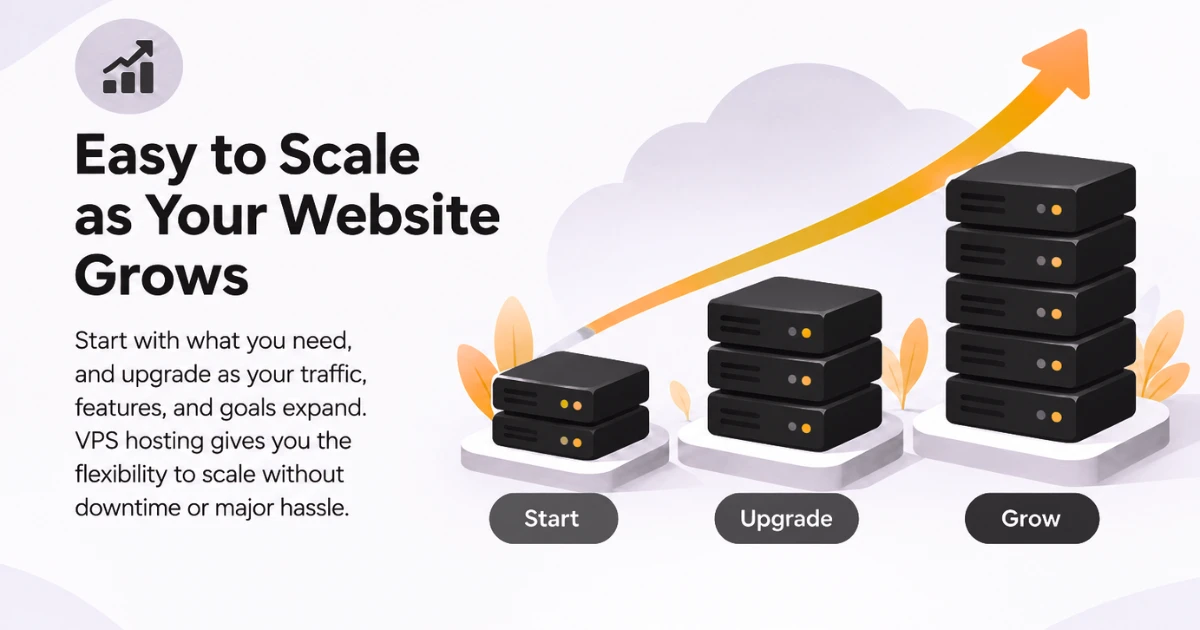
- Upgrading CPU as your workload increases
- Increasing RAM when your applications need more memory
- Expanding storage as your content or database grows
- Increasing bandwidth where the provider supports it
- Handling rising website traffic without an immediate platform change
- Supporting growing databases and applications over time
- Avoiding an abrupt move to an entirely different hosting environment the moment you outgrow your current plan
Scalability depends on your VPS provider, the specific plan, available resources, and the underlying infrastructure. VPS hosting is not infinitely scalable. At some point, a workload can outgrow what a VPS reasonably supports, which is when a dedicated server becomes worth considering. It’s worth thinking about your expected growth over the next year or so before choosing a plan, rather than sizing only for today’s traffic.
5) Improved Security and Isolation
- Websites operate in separate virtual environments on the same physical hardware
- A problem on another customer’s VPS is less likely to directly affect your server, compared with shared hosting
- Greater control over your own security settings
- The ability to configure firewalls and access controls yourself
- Better suited to websites that need more say over their own hosting environment
VPS isolation is not the same thing as complete security. Your website’s applications can still have vulnerabilities. Weak passwords and poor access controls can still create real risk. Your operating system and software still need regular updates, and backups still matter regardless of how isolated your VPS is. Canonical’s own Ubuntu Server documentation on automatic updates is a good example of the kind of ongoing maintenance a VPS still needs, isolation or not.
6) Better Support for Custom Applications
- Installing the specific software and server applications your project actually needs
- Running custom scripts and applications that shared hosting environments often restrict
- Supporting different development environments and language versions
- Genuinely useful for developers and businesses with specialised hosting requirements
- More flexibility overall than a standard shared hosting environment allows
Compatibility still depends on your VPS operating system, available resources, server configuration, and what your specific software actually requires. For a common example, WordPress itself has fairly modest official requirements (currently PHP 8.3 or greater and a compatible MySQL or MariaDB version, per WordPress.org’s own hosting requirements page), but more specialised applications can have far more specific needs that shared hosting simply won’t accommodate.
7) Cost-Effective Alternative to a Dedicated Server
- Generally more affordable than renting an entire physical server, in many cases
- Dedicated virtual resources rather than resources shared unpredictably with other accounts
- Meaningfully more control than shared hosting, without paying for a whole physical machine
- Well suited to growing websites that have outgrown shared hosting but don’t yet need a full dedicated server
- A practical middle ground between shared and dedicated hosting in terms of resources, control, and price
VPS hosting isn’t universally cheaper than every alternative in every situation. Total cost depends on the resources you choose, whether you pick managed or unmanaged service, backup costs, any software licensing, additional tools, support level, and how much you expect to scale over time.
FAQs
Is VPS hosting better than shared hosting?
It depends on what your website actually needs. VPS hosting generally offers more dedicated resources, more control, and better isolation than shared hosting, but it also costs more and can require more technical responsibility, particularly on unmanaged plans. Shared hosting remains a reasonable choice for smaller, lower-traffic websites that already run well within its limits. Neither option is universally better; it comes down to your resources, control needs, budget, and how much server management you want to handle.
Is VPS hosting suitable for WordPress websites?
It can be, particularly once a WordPress site has growing traffic, needs more consistent resources, requires specific performance tuning, or needs configuration options that shared hosting doesn’t allow. For smaller WordPress websites running comfortably on shared hosting with reasonable traffic, a VPS may not be necessary yet. If you’re already comfortable managing WordPress but want more server control, WordPress hosting built specifically around VPS resources can be worth comparing against a standard shared WordPress plan.
How much traffic can a VPS handle?
There’s no single traffic number that applies to every VPS plan. How much traffic your VPS can comfortably handle depends on CPU, RAM, storage and disk performance, available bandwidth, your database workload, caching setup, how well your website is optimised, your application’s architecture, and the type of traffic you receive (steady versus spiky, for example). Two websites with identical visitor counts can place very different loads on a server depending on these factors.
Can I upgrade my VPS as my website grows?
In many cases, yes. Most VPS providers let you upgrade CPU, RAM, storage, and bandwidth, though the exact options depend on your provider and specific plan. Some upgrades apply instantly, while others may require a brief migration to new hardware, so it’s worth checking your provider’s upgrade process before you actually need it urgently.
Do I need technical knowledge to manage a VPS?
That depends on whether you choose managed or unmanaged VPS hosting. With an unmanaged VPS, you generally need a reasonable working knowledge of Linux (or whichever operating system you choose), server configuration, security practices, applying updates, backups, and basic troubleshooting. Managed VPS hosting shifts much of that day-to-day server administration to the provider, which is worth considering if you’d rather focus on your website than the server underneath it.
Is VPS hosting worth it for a small business website?
There’s no blanket yes or no here. It’s worth weighing your current traffic, how much your website already uses in resources, whether the site is business-critical, whether you need custom applications, how much security and isolation you actually need, your budget, your team’s technical expertise, and how much growth you’re expecting. A small business website that already performs well on shared hosting doesn’t necessarily need to move to a VPS immediately just because VPS hosting exists.
Ready to Move Your Website to VPS Hosting?
VPS hosting can offer better performance, more control, stronger isolation, more flexibility, and real room to grow compared with shared hosting. For websites that have outgrown shared hosting, or that need more dedicated resources and configuration control, it’s a practical next step.
Before choosing a plan, compare CPU, RAM, storage, bandwidth, available operating systems, management level (managed versus unmanaged), backup options, security features, technical support, and upgrade paths. The most expensive VPS plan on offer isn’t automatically the right one. The right plan is the one that actually matches your website’s current needs and reasonable future growth.