 Domain SearchInstantly check and register your perfect .pk or international domain
 Web HostingGet a .pk domain for as low as PKR 467
 cPanel HostingUser-friendly hosting powered by cPanel
 Reseller HostingLaunch your own hosting business with minimal technical requirements
 Windows HostingOptimized for Windows-based applications and websites
 Affiliate ProgramEarn referral commissions by promoting our services
 WordPress HostingFast & Reliable WordPress Hosting
 Domain TransferMigrate your existing domain seamlessly with zero downtime.
 All DomainsAccess 324+ top-level domains (TLDs) worldwide from a single platform
 Whois LookupIdentify the owner of any domain using our whois and rdap lookup tool
 Managed VPS Hosting
 AI Website BuilderCreate beautiful websites effortlessly using intuitive drag-and-drop features
 Online ShopLaunch a professional online shop with no technical skills required
 BlogDiscover expert guides on hosting, websites, SEO, and digital growth strategies
 ContactGet instant assistance via live chat or email
 SupportAccess help articles, tutorials, and service documentation
 SSL CertificatesEncrypt data, build trust, and boost SEO.
Ever heard of domain registrar frustrations? Maybe you’ve seen someone complaining on a forum that they registered a domain for a steal, only to get hit with a massive renewal bill a year later.
Or maybe you’ve heard about business owners who couldn’t reach support when their site went down. These aren’t just minor annoyances; they can seriously hurt your business.
Your domain registrar is one of the most critical decisions you’ll make for your business.
When you register a domain, you don’t just get an internet address. Your registrar guards your brand’s digital identity. The market is flooded with options, but not all registrars are created equal.
Some are built for the long haul; others are there to trap you in a cycle of hidden fees and poor service.
So, let me walk you through the must-have features to avoid pitfalls and choose a partner you can trust.
5+ Must-Have Features for a Domain Registrar
1) Price Transparency
Price is almost always the first thing people look at. It is also where many registrars get tricky.
They’ll entice with a jaw-droppingly low price for your first year; sometimes as low as a few dollars to get you in the door.
The problem? The renewal price you’ll pay every year after that can be several times higher, catching many people off guard.
Look for straight-up, honest pricing.
A good registrar will clearly show you both the introductory rate and the standard renewal rate before you even add the domain to your cart.
You should also see the cost of any add-ons, like WHOIS privacy or additional DNS features, upfront.
A major tip is to look at the long-term cost, not just the initial discount.
Some registrars even let you register for multiple years at a locked-in rate, which can protect you from future price hikes.
You’ll find that predictable pricing lets you plan your budget and avoid unpleasant financial surprises down the road.
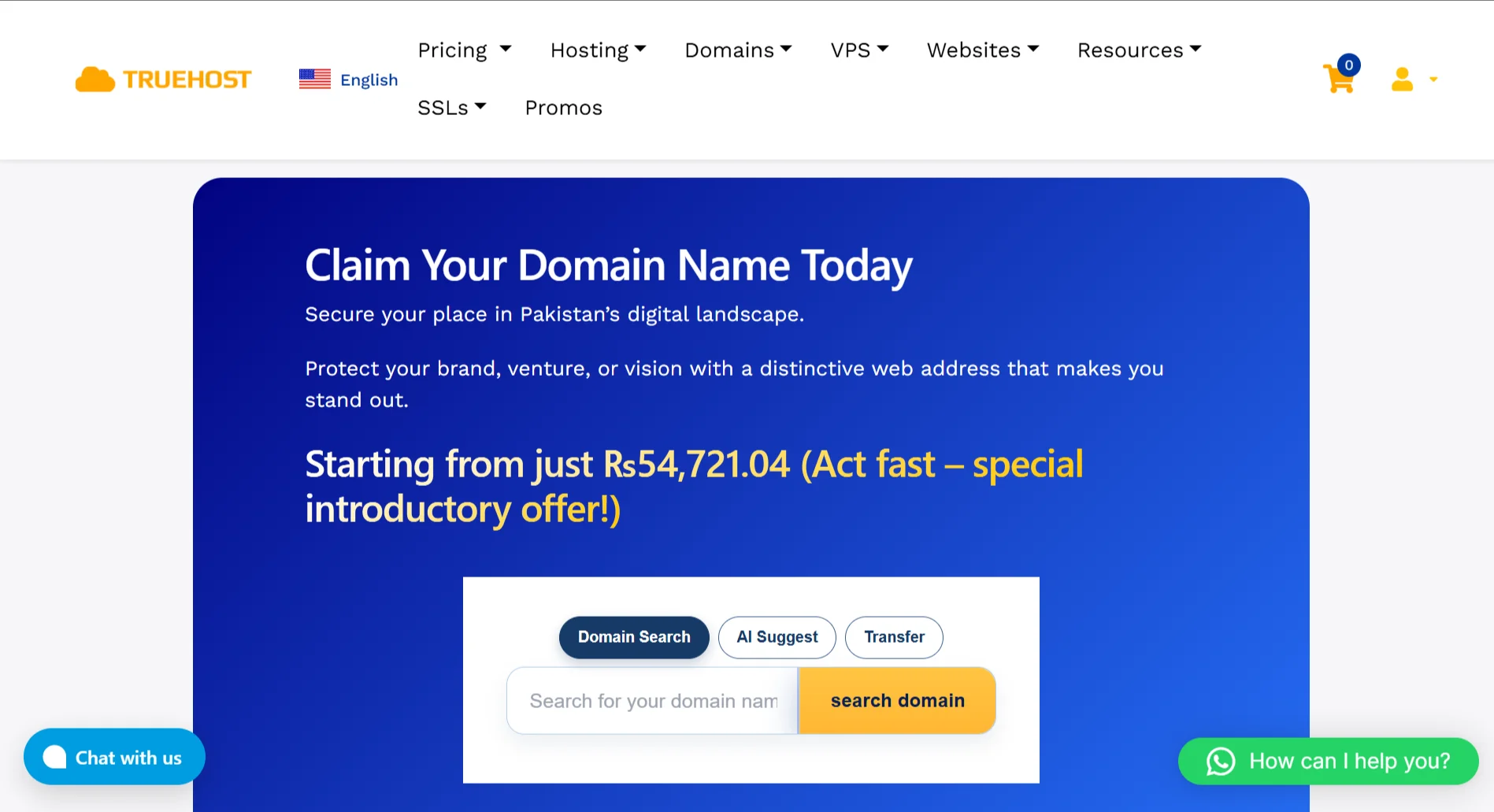
At Truehost, we promise clear, transparent pricing. These are some of the prices for domains:
| Domain extension | Registration | Renewal | Transfer |
| .com | ₨2,190.54 | ₨3,357.88 | ₨3,171.33 |
| .pk | ₨54,721.04 | ₨19,785.50 | ₨32,335.16 |
| .net | ₨2,411.00 | ₨4,171.91 | ₨4,171.91 |
| .shop | ₨619.00 | ₨14,107.06 | ₨11,876.95 |
We have so many other domain extensions you can choose from. It’ll only take a sec to find the price of your preferred domain using our domain search tool.
2) Customer Support
When something goes wrong with your domain, it feels like an emergency. Your website might be down, or you might be locked out of your account.
In these moments, good customer support is crucial.
The best registrars offer support through multiple channels: 24/7 live chat, phone, and a ticket system.
If a problem happens late on a Saturday night, you don’t want to wait until Monday morning for an email reply. You want to talk to someone who can help you immediately.
Also, consider the quality of that support. Is the team knowledgeable and helpful, or do they just read from a script?
When you’re running a business, you need a team that can provide clear, technical guidance without wasting your time with upsells or irrelevant advice.
Checking reviews on third-party sites can give you a real-world sense of a registrar’s support reputation.
3) Good Reputation & Positive Reviews
A company’s reputation is built over time, and it’s one of the most reliable indicators of what you can expect.
Before you hand over your money, do a little digging. Check out what existing customers are saying on independent review platforms, social media, and tech forums.
Are there many unresolved complaints? Do people frequently mention issues with transfers, billing, or hidden fees?
A pattern of poor reviews is a massive red flag. On the flip side, a registrar with a solid, long-standing reputation for integrity and service is a safe bet.
They’re likely a stable company invested in keeping customers happy long term, not just making a quick sale.
4) Security
Your domain is a valuable asset. If it’s compromised, you could lose control of your website, email, and even your brand. Security features are your first line of defense.
Some essential security features you must have include:
- Two-factor authentication (2FA): This adds an extra layer of security to your account, so even if someone gets your password, they can’t log in without a code from your phone.
- Domain Locking: This feature prevents unauthorized transfers of your domain to another registrar. It’s a simple but effective way to stop domain theft.
- WHOIS Privacy Protection: Keeps your personal contact information (like your address and phone number) out of the public WHOIS database, shielding you from spam and potential scams. Many reputable registrars now offer this for free.
Ideally, these security features should be built in and easy to manage from your dashboard, not sold as expensive extras.
5) Ease of Use
You shouldn’t need to be a tech wizard to manage your domain. A good registrar provides a clean, intuitive dashboard where you can easily find everything you need.
This includes managing DNS records, setting up email forwarding, updating contact information, and configuring security settings without hunting through confusing menus.
A user-friendly interface saves you time and prevents mistakes.
Top domain registrars prioritize this, knowing customers want to spend their energy building their business, not wrestling with a clunky control panel.
6) Friendly Transfer Policy
A friendly transfer policy means two things: it’s easy to transfer your domain to the registrar, and it’s just as easy to transfer it away if you ever need to.
A trustworthy registrar should make leaving simple. They should provide instant access to your EPP or Auth code to initiate a transfer.
They should also have clear, easy-to-find documentation on the process.
If you ever feel like a registrar is making it difficult to leave, that’s a sign they’re relying on lock-in rather than good service to keep your business
7) Scalability
If you’re just starting, you might only need one domain. But what about next year? Or the year after?
As your business grows, you might need to register multiple domain extensions (.com, .pk, .shop), manage different websites, or even build a portfolio for brand protection.
A registrar built for scalability will offer features like:
- Bulk domain management: Edit DNS settings or renew multiple domains at once instead of one by one.
- API access: For developers and larger businesses, an API lets you automate tasks like DNS updates and renewals, saving you time and effort.
Think ahead and choose a registrar that can grow so you don’t have to migrate later.
8) Domain Management
Good domain management means having control over the technical side of your domain. This means you need full control over your DNS settings.
Look for a registrar that lets you easily add, edit, or delete DNS records (like A, CNAME, MX, and TXT records). This is how you connect your domain to a hosting provider, an email service, or a website builder.
Advanced DNS tools, like DNSSEC (which helps protect against certain types of cyberattacks), are also a strong sign that a registrar takes its infrastructure seriously.
You want reliable, fast DNS to keep your website accessible to visitors.
Domain Registrar Red Flags to Watch Out For
- Unusually low prices with huge renewal hikes: A super cheap first year is a classic bait-and-switch tactic.
- Hidden fees for extras: Charging extra for WHOIS privacy, basic DNS features, or even a simple domain transfer signals a nickel-and-dime approach.
- No phone or live chat support: Relying only on a slow email ticketing system is a huge red flag. You deserve access to immediate help.
- Complicated or paid domain transfer process: Your registrar shouldn’t charge a fee to transfer your domain, and the process should be simple and clear.
- Vague or missing WHOIS privacy policy: This suggests they don’t take your personal security seriously.
- Poor reviews or unresolved complaints online: If multiple customers are saying the same negative things, believe them.
- Auto-renewal traps without clear reminders: A good registrar will send you clear, timely reminders before your domain is auto-renewed, so you’re not caught off guard
Register Your Domain with the Best Registrar
For businesses and individuals in Pakistan, Truehost is the smart choice. We offer so many domain extensions to choose from.
We also have local extensions to build credibility and search visibility in the local market.
Our pricing is transparent and budget-friendly. Register .pk at just ₨54,721.04
with yearly renewals at ₨19,785.50.
You get user-friendly domain management tools, 24/7 expert support, and complete business solutions like email, SSL, and web hosting – all from one dashboard.
Search your domain, secure it instantly, and launch online.