 Domain SearchInstantly check and register your perfect .pk or international domain
 Web HostingGet a .pk domain for as low as PKR 467
 cPanel HostingUser-friendly hosting powered by cPanel
 Reseller HostingLaunch your own hosting business with minimal technical requirements
 Windows HostingOptimized for Windows-based applications and websites
 Affiliate ProgramEarn referral commissions by promoting our services
 WordPress HostingFast & Reliable WordPress Hosting
 Domain TransferMigrate your existing domain seamlessly with zero downtime.
 All DomainsAccess 324+ top-level domains (TLDs) worldwide from a single platform
 Whois LookupIdentify the owner of any domain using our whois and rdap lookup tool
 Managed VPS Hosting
 AI Website BuilderCreate beautiful websites effortlessly using intuitive drag-and-drop features
 Online ShopLaunch a professional online shop with no technical skills required
 BlogDiscover expert guides on hosting, websites, SEO, and digital growth strategies
 ContactGet instant assistance via live chat or email
 SupportAccess help articles, tutorials, and service documentation
 SSL CertificatesEncrypt data, build trust, and boost SEO.
The ecommerce website cost in Pakistan can range from under PKR 50,000 to well over PKR 1,500,000, and if nobody has told you what drives that gap, you are likely to either overpay or underinvest.
So, you need to know basically what your money is paying for at each tier and which option makes sense for a business at your stage.
The difference can be huge, but it becomes easier to understand once you look at what goes into building and running the store.
A small business selling a few products online needs a very different setup from a large retailer, wholesaler, or marketplace with thousands of products and several systems connected to the website.
So, before you accept an eCommerce website quote, it helps to know what you are paying for, what pushes the price up, and which option makes sense for your business right now.
What Are You Paying For?
An eCommerce website is made up of several costs. Some are paid once, while others come back every year or with each transaction.
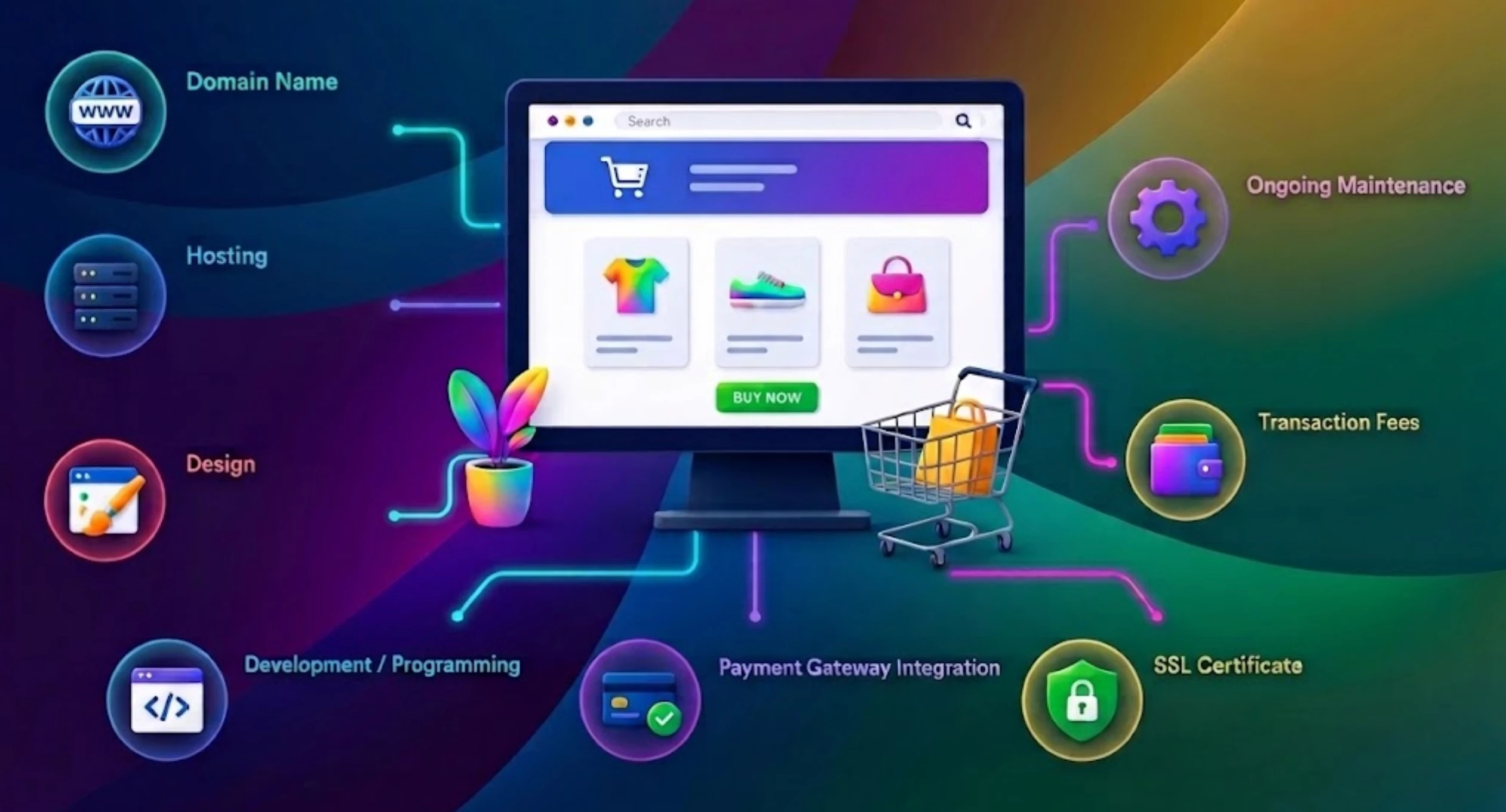
1. Domain name: This is your website address, such as yourbrand.pk or yourbrand.com. You pay to register the domain and renew it annually.
2. Hosting: Your website needs a server to store its files, products, images, and databases. Shared hosting is usually the cheapest starting point, while managed hosting gives you more resources and support as your store grows.
3. Design: A template-based design keeps the cost lower because the basic layout is already available. A custom design costs more because the pages are created specifically for your business.
4. Development/programming: This is often the biggest variable in an eCommerce quote. A basic store can be set up with standard features, while custom functions such as vendor dashboards, advanced inventory systems, ERP connections, or special checkout processes require more development work.
5. Payment gateway integration: Pakistani customers commonly use JazzCash, EasyPaisa, bank transfers, and card payments. The cost of adding these depends on the payment methods you need and the amount of development required.
6. SSL certificate: SSL secures the connection between your website and its visitors and enables HTTPS. It is essential for an eCommerce website. Some providers include it for free, while others charge separately.
7. Ongoing maintenance: Your store may need security updates, backups, plugin updates, bug fixes, and technical support after launch. If someone else handles these tasks, maintenance becomes an ongoing cost.
Ecommerce Website Cost in Pakistan
Basic Online Store: Around PKR 40,000-150,000
- A basic online store usually has a small catalog of under 50 products, a template-based design, one or two payment gateways, and shared hosting.
- It may also include a shopping cart, order management, mobile-responsive pages, basic SEO, and cash-on-delivery support.
- This is a practical starting point for side businesses, early-stage startups, artisans, and boutiques moving from social media or WhatsApp orders to a proper online store.
Professional Ecommerce Store: Around PKR 150,000-400,000
- A professional eCommerce store gives you more functionality and a more customized customer experience.
- You get a larger product catalog, custom or semi-custom design, inventory management, customer accounts, shipping calculations, and courier integration.
- For example, a fashion brand may need size and color variations, while an electronics shop may need product filters, detailed specifications, stock tracking, and larger category structures.
- This range is a better fit for growing retailers, fashion brands, and electronics shops that already have a product range and need their website to support more of their daily sales operations.
Advanced / Enterprise / Marketplace: PKR 400,000-1,500,000+
- These websites are built for businesses with more complicated requirements.
- They can include multi-vendor functionality, ERP integration, custom workflows, large product catalogs, advanced inventory systems, vendor dashboards, commission management, and custom checkout processes.
- A Daraz-like marketplace, for example, needs much more than a normal online shop. It has to support multiple sellers, customer accounts, vendor management, payments, commissions, orders, and other systems working together.
- For large wholesalers, enterprises, or businesses building a marketplace, spending PKR 400,000–1,500,000+ can be reasonable. A highly customized platform can go beyond this range.
The price ranges are useful starting points, but the features included in a package are just as important as the headline price.
A PKR 100,000 store with essential features included can be a better deal than a cheaper quote that leaves you paying separately for payment integration, SSL, hosting, or other basics.
What Pushes the Price Up (And What Pulls It Down)
Cost drivers:
- Custom design vs. template: A website designed from scratch requires more design and development work than a configured template.
- Number of products and categories: A store with 20 products takes less work to set up than one with thousands of products across many categories.
- Payment gateway count and complexity: Adding several payment methods or creating a custom checkout can increase development costs.
- Courier/shipping integration: Integrations with services such as TCS and Leopards may require API connections, shipping calculations, order processing, and tracking.
- Number of admin users / vendor accounts: A basic store may need only one or two administrators, while a marketplace may need separate accounts and dashboards for many vendors.
- SEO setup depth: Basic on-page SEO costs less than a larger setup covering technical SEO, structured data, redirects, keyword mapping, and content optimization.
- Post-launch support period: A package that includes extended technical support will generally cost more than one that only covers the initial launch.
Cost reducers:
- AI-powered Online Store: An AI-powered website builder reduces the amount of technical work needed to get a store online. You start with existing eCommerce tools instead of paying for every feature to be developed from scratch.
- DIY vs. hiring a developer: If you are comfortable creating and managing your own website, an online store builder can significantly reduce the initial cost.
- Starting with a focused MVP and expanding: You do not need every product and feature on day one. Starting with 20–50 products lets you test your store and add more functionality as the business grows.
DIY vs. Developer vs. Done-For-You
a) Do It Yourself (DIY)
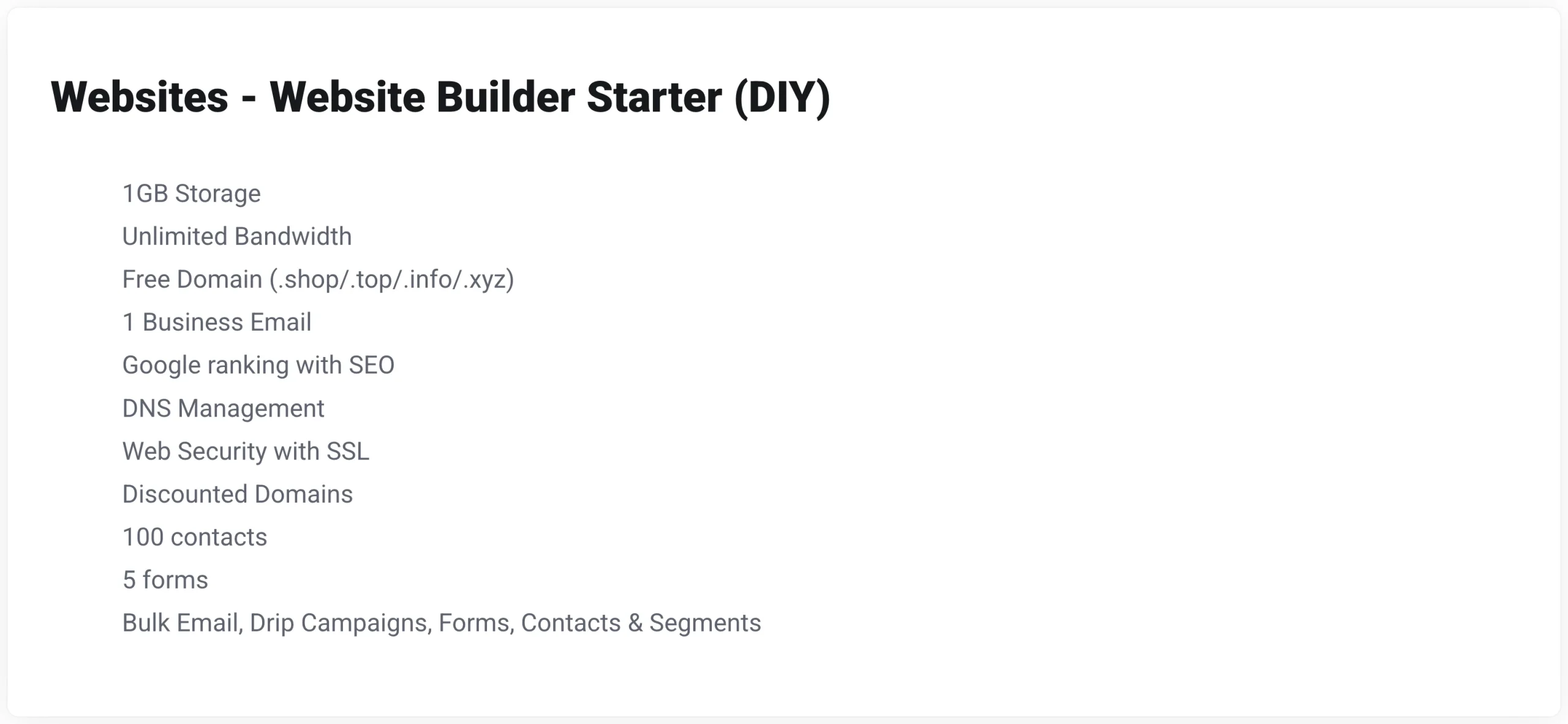
At Truehost, we offer an online shop builder as a standalone product for businesses that want to create and manage their own online store.
It is a practical low-cost option if you are starting small, testing a product, or want to manage your website without depending on a developer for every change.
It starts at ₨5,370.35 annually, with 1GB storage, unlimited bandwidth, selected free domains, and a business email.
b) Done-For-You (Expert-Built)
If you would rather have the store built for you, Truehost’s in-house E-Commerce Website package gives you a ready-to-sell store without requiring technical skills on your end.
The package is a one-time investment of ₨84,512.35 and includes up to 20 products, a shopping cart, JazzCash/EasyPaisa integration, mobile-responsive design, and free SSL.
c) Custom Development
Custom development is for businesses that need features outside a standard eCommerce setup, such as multi-vendor functionality, ERP integration, a large catalog, or custom workflows.
The cost starts at around PKR 400,000 and above, depending on what needs to be built and which systems need to connect to the website.
At truehost, we offer the Hire a Developer plan for exactly this. It costs ₨27,982.35.
Platform Choice and What It Costs You Over Time
The platform you choose also determines what you will pay and manage after launch.
a. WooCommerce: WooCommerce has a low entry cost, gives you ownership of your website, and supports a wide range of payment gateways and plugins. You do, however, need to pay for hosting and manage updates, plugins, backups, security, and maintenance.
b. Shopify: This is a hosted eCommerce platform with a monthly subscription. Its pricing is in USD, so changes in the PKR/USD exchange rate can affect your ongoing costs. Check which local payment options are available before choosing it.
c. Truehost: Our hosted website builder combines the website platform and hosting into one service. You get predictable annual pricing, local support, and eCommerce functionality without having to manage multiple plugins.
The best choice is not simply the platform with the lowest starting price. Look at what you will pay and manage each year after the website goes live.
Hidden Costs to Budget For
1. Annual domain renewal: Registering your domain is only the first payment. You need to renew it every year to keep the domain active.
2. SSL certificate: Check if SSL is included in your website or hosting package. If it is not, add the certificate cost to your budget.
3. Payment gateway transaction fees: JazzCash and EasyPaisa typically charge transaction fees, often around 1.5%-2.5%, depending on the service and arrangement. At PKR 500,000 in monthly sales, a 1.5%-2.5% fee would be around PKR 7,500–12,500.
4. Product photography and content writing: You need clear product images and useful descriptions before customers can make informed purchases. Professional photography and copywriting can add to your launch budget.
5. SEO setup: Basic SEO may be included in your website package, while ongoing SEO work is normally a separate expense.
6. Staff training: Someone needs to manage products, orders, inventory, and customer accounts. If several members of your team will use the website, allow time for training.
Truehost’s E-Commerce Website package includes free SSL and basic SEO setup, so these two costs are already included.
Ecommerce Website Cost FAQs
What is the average cost of an e-commerce website?
The ecommerce website cost in Pakistan can range from around PKR 40,000–150,000 for a basic store to PKR 150,000–400,000 for a professional ecommerce website. Advanced eCommerce platforms and marketplaces can cost PKR 400,000–1,500,000 or more.
The final price depends on your product catalog, design, payment gateways, integrations, and custom features.
Which payment gateways can I use on a Pakistani e-commerce website?
Common options include JazzCash, EasyPaisa, bank transfers, and card payments. The options available to your business depend on the payment provider and eCommerce platform you choose.
Truehost’s E-Commerce Website package supports up to two payment gateway integrations, including JazzCash and EasyPaisa.
How long does it take to build an e-commerce website in Pakistan?
A standard eCommerce website can take a few weeks, depending on the number of products, design requirements, payment gateways, and other integrations.
Custom eCommerce websites and marketplaces can take several months.
An online store builder can reduce the setup time because the eCommerce platform is already in place.
What is the cheapest way to launch an online store in Pakistan?
For a small business, an online store builder is one of the most affordable ways to launch without paying for custom development.
You can start with a focused catalog, manage the website yourself, and add more products and features as your business grows.
Launch Your Online Store With Truehost
You now have a clear picture of what an e-commerce website cost in Pakistan really looks like, across every budget tier, every platform, and every type of business.
It’s all about which option matches where your business is right now.
If you are just getting started and want to move fast, online shop builder gets you live in minutes, with e-commerce built in.
If you want a full store built for you, our E-Commerce Website package provides a ready-to-sell store with payment gateways, a product catalog, mobile-responsive design, free SSL, and basic SEO for a one-time investment.
If your business needs multi-vendor functionality, ERP integration, thousands of products, or custom workflows, our custom developers give you room to build around those requirements.
You do not need to spend PKR 1.5 million to start selling online. Start with what your customers need today, get your store live, and add more features as the business grows.