 Domain SearchInstantly check and register your perfect .pk or international domain
 Web HostingGet a .pk domain for as low as PKR 467
 cPanel HostingUser-friendly hosting powered by cPanel
 Reseller HostingLaunch your own hosting business with minimal technical requirements
 Windows HostingOptimized for Windows-based applications and websites
 Affiliate ProgramEarn referral commissions by promoting our services
 WordPress HostingFast & Reliable WordPress Hosting
 Domain TransferMigrate your existing domain seamlessly with zero downtime.
 All DomainsAccess 324+ top-level domains (TLDs) worldwide from a single platform
 Whois LookupIdentify the owner of any domain using our whois and rdap lookup tool
 Managed VPS Hosting
 AI Website BuilderCreate beautiful websites effortlessly using intuitive drag-and-drop features
 Online ShopLaunch a professional online shop with no technical skills required
 BlogDiscover expert guides on hosting, websites, SEO, and digital growth strategies
 ContactGet instant assistance via live chat or email
 SupportAccess help articles, tutorials, and service documentation
 SSL CertificatesEncrypt data, build trust, and boost SEO.
A domain name gives your real estate business a professional address online. It’s the first thing a potential buyer, tenant, or investor sees before they even land on your website, and it shapes how seriously they take you before they’ve read a single listing.
Real estate agencies, property agents, developers, landlords, property managers, rental businesses, and property listing platforms all rely on domains to build that first impression. You can go with a general extension like .com, or you can choose from a growing list of industry-specific options built specifically around property: .realestate, .realty, .property, .properties, .rent, .apartments, .homes, and .land.
The right domain makes your business easier to identify, remember, and find online. For Pakistani businesses specifically, that means picking something easy to spell, relevant to what you actually do, and suited to the people you’re trying to reach.
This article walks through your options for domains for real estate websites, so you can pick something that fits your brand, your services, and where you want your business to go.
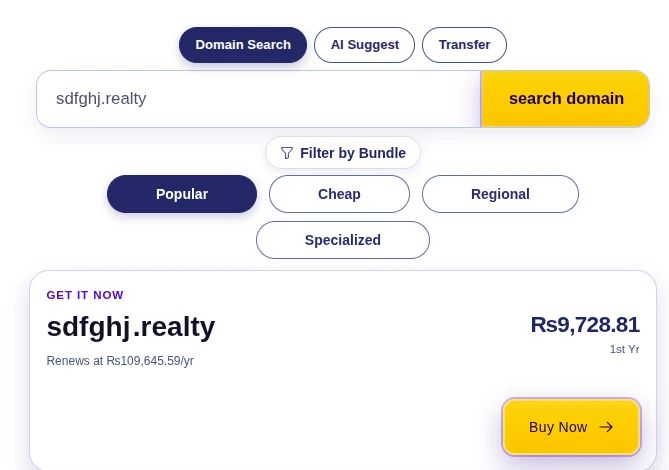
Already know the name you want? Search for your domain now and see what’s available before you read on.
Real Estate Domain Name Extensions
You don’t have to settle for a .com domain if the name you want is already taken. There are several extensions built specifically around property and real estate that you can consider instead.
The right choice depends on your business type, your brand, your services, availability, your budget, and your long-term plans. Here’s how to think through each option, with a few domain idea angles you can borrow as you go.
Traditional TLDs
1) .com
This is still the safest and most trusted option. It’s familiar, easy to remember, and works well for both local and international buyers.
Why it works: People instinctively trust .com, and they’re more likely to type it without a second thought.
Real estate domain idea angle:
- Brand-focused names like
LahoreHomes.comorPrimeEstates.com - Short, memorable agency names that can grow with your business
2) .pk
If your audience is entirely within Pakistan, .pk is worth serious consideration. It signals that you’re a local business right away, which matters to buyers and tenants searching for properties in their own city or region.
Why it works: Local extensions build immediate trust with a local audience, and they can make your business feel more accessible to buyers who specifically want a Pakistani agent or developer.
Real estate domain idea angle:
LahoreProperty.pkKarachiHomes.pkorIslamabadRentals.pk
Ready to check what’s available? Search .com, .pk, and every other extension covered here in one place, and pair whichever you choose with an SSL certificate to keep your site secure from day one.
Real Estate–Specific gTLDs
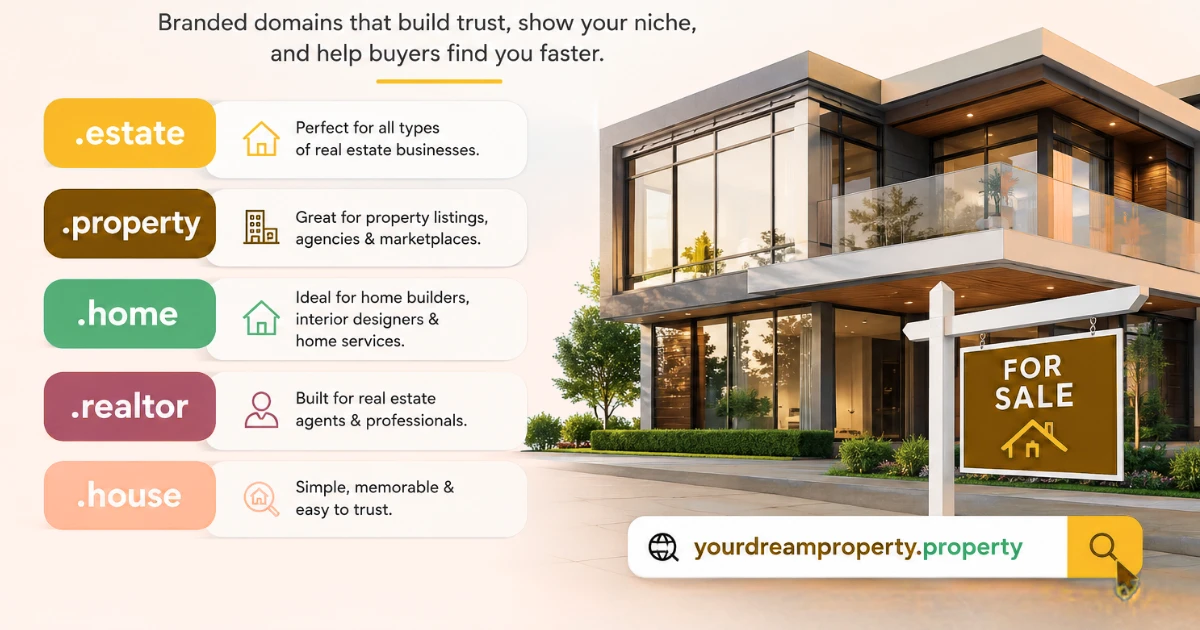
These extensions help you stand out instantly by clearly stating what you do.
1) .realty / .realestate
Straight to the point. Anyone who sees your domain already knows your niche.
Why it works: It boosts clarity and can improve click-through rates because it matches what people are actually searching for.
Real estate domain idea angle:
UrbanLiving.realestateNextLevelRealty.realty
2) .property / .properties
Professional and flexible. Works across residential, commercial, and mixed listings.
Why it works: It keeps things broad while still sounding industry-specific, which suits businesses that don’t want to be boxed into one narrow category.
Real estate domain idea angle:
EliteProperties.propertyCityscape.properties
3) .rent / .apartments
Ideal if your focus is leasing rather than selling.
Why it works: It immediately attracts users looking for rentals, cutting through traffic that isn’t actually relevant to what you offer.
Real estate domain idea angle:
EasyRentals.rentUrbanApartments.apartments
4) .homes
This feels more personal and lifestyle-focused, great for residential markets.
Why it works: It connects emotionally with buyers looking for a place to live, not just a property.
Real estate domain idea angle:
DreamHomes.homesFamilyFirst.homes
5) .land
Best suited for niche markets like land sales and rural or agricultural listings.
Why it works: It positions your brand clearly within a specific segment rather than competing with general property listings.
Real estate domain idea angle:
PrimeLand.landKarachiFarms.land
How to Choose the Right Domain Extension for Your Real Estate Business
Here’s a quick way to match your business type with a suitable extension.
| Business Type | Suitable Domain Extensions |
|---|---|
| Real estate agency | .realestate, .realty, .com |
| Property consultant | .realestate, .realty, .property |
| Property developer | .realestate, .property, .homes, .land |
| Property listing website | .properties, .property, .realestate |
| Rental business | .rent, .apartments, .com |
| Apartment business | .apartments, .homes, .property |
| Land business | .land, .property, .realestate |
| Residential property business | .homes, .property, .com |
| General real estate brand | .realestate, .realty, .com |
The extension you pick should match your business without unnecessarily limiting where you want to take it. If you’re already planning to expand into a different type of property in the next couple of years, weigh that into your decision now rather than after you’ve built a brand around a narrower name.
Real Estate Domain Name Ideas
A few structures come up again and again when real estate businesses build their domain names: brand plus real estate, brand plus location, brand plus property, brand plus homes, brand plus rentals, or brand plus land.
As examples only, not actual businesses, you might see something like LahoreProperty, PrimeRealty, CapitalProperties, UrbanLand, or CityRentals. These are just illustrations of the pattern, so check availability yourself before assuming any name is free to register.
What Makes a Good Domain for a Real Estate Website?
a) Relevant to Real Estate
Your domain should clearly relate to what you actually do, whether that’s running a real estate agency, working as a property consultant, developing new buildings, managing rentals, or handling property management for other owners.
If you’re a real estate professional trying to stand out in a crowded market, an industry-specific extension can do some of that work for you. It tells a visitor what you do before they even click.
b) Short and Easy to Remember
Shorter, simpler domain names are easier for customers to remember and type later. That means easy spelling, easy pronunciation, no unnecessary numbers, and no excessive hyphens.
Imagine giving your domain to a potential buyer over the phone. If you have to spell it three times or explain where the hyphens and numbers go, it’s probably worth choosing something simpler. A recognisable business or brand name usually works better than a long, descriptive string of words.
c) Suitable for Your Target Audience
Your domain should make sense to the people you actually serve. That could be property buyers, tenants, landlords, property investors, developers, or commercial property clients, and each of these groups reads a domain slightly differently.
A domain aimed at first-time home buyers might lean warmer and more residential. One aimed at commercial investors might lean more direct and business-focused. Think about who’s actually going to type or click your address before settling on one.
d) Suitable for Long-Term Growth
Think about where your business is going, not just what you’re offering today. A company that currently sells houses may later expand into rentals, land, commercial property, property management, or property investment.
Choosing a domain that ties you too tightly to one single service can box you in later. If you can already see your business expanding in a few years, pick something that leaves room for that.
e) Available and Legally Safe
Before you fall in love with a name, check that it’s actually available, and check that it doesn’t create a conflict with an existing trademark. Avoid names that are confusingly similar to established, well-known brands.
Most of these property-focused extensions are open gTLDs managed under ICANN’s oversight, meaning anyone can register them without special approval, though a few extension-specific requirements do exist, so it’s worth reviewing those before you commit to a specific one.
What to Consider Before Choosing a Domain for a Real Estate Website
- Match the extension to your service. Choose
.realestatefor a broad real estate business,.rentfor rental services,.homesfor residential property,.landfor land businesses, and so on. - Keep the name simple. Choose something easy to spell, remember, pronounce, and communicate over the phone.
- Think about your audience. Consider whether you serve property buyers, tenants, landlords, investors, developers, or commercial clients.
- Consider your location. A local Pakistani real estate business may benefit from a recognisable brand or location in its domain where it fits naturally.
- Think about your long-term brand. Avoid choosing a domain that restricts the business if your services expand later.
- Check availability. Your preferred domain may already be registered by someone else.
- Check registration requirements. Some domain extensions have specific rules or eligibility requirements worth confirming first.
- Compare registration and renewal prices. A domain might look cheap during the first year and cost considerably more when it’s time to renew. Check both prices before you register so there are no surprises later.
- Check trademark conflicts. Make sure the name doesn’t infringe on another company’s protected brand.
- Avoid unnecessary numbers and hyphens. Keep the domain simple and easy to communicate.
- Choose a name that matches your brand. The domain should make sense alongside your company’s name and services.
Once you’ve worked through this list, checking your preferred domain’s availability takes just a few minutes.
Common Mistakes to Avoid When Choosing a Real Estate Domain
- Delaying registration once you’ve found a good name. Available names, especially short or brandable ones, don’t stay available for long.
- Picking a name that’s too long or hard to spell. If a client hesitates to type it after hearing it once, it’s already working against you.
- Ignoring the renewal price. Some extensions look affordable at signup and jump sharply the following year. Check both before you commit.
- Choosing an extension that doesn’t match your business. A rental-focused business using
.land, or a land business using.rent, sends the wrong signal before anyone even visits the site. - Locking yourself into one city or service too early. A name like
KarachiRentalsOnly.comcan box you in if you later expand to sales, other cities, or commercial property. - Skipping the trademark check. Registering a name too close to an established brand can lead to disputes and, in some cases, losing the domain entirely later.
- Forgetting privacy protection and domain lock. Leaving these off makes your personal details public and leaves your domain more exposed to unauthorised transfers.
Ready to Get Started with Domains for Real Estate Websites?
Once you have settled on a name and extension, the rest of the process is straightforward. Choose a domain name that matches your real estate business, select an appropriate extension, and check availability.
Compare registration and renewal pricing, then register the domain once you’re confident it’s the right fit. From there, connect it to your website, set up professional business email on the same domain, and start building out your real estate website with property listings, contact details, and the information your clients actually need.
A good domain for your real estate business should be relevant, easy to remember, suitable for your target audience, appropriate for what you actually do, and flexible enough to support where you’re headed next.