 Domain SearchInstantly check and register your perfect .pk or international domain
 Web HostingGet a .pk domain for as low as PKR 467
 cPanel HostingUser-friendly hosting powered by cPanel
 Reseller HostingLaunch your own hosting business with minimal technical requirements
 Windows HostingOptimized for Windows-based applications and websites
 Affiliate ProgramEarn referral commissions by promoting our services
 WordPress HostingFast & Reliable WordPress Hosting
 Domain TransferMigrate your existing domain seamlessly with zero downtime.
 All DomainsAccess 324+ top-level domains (TLDs) worldwide from a single platform
 Whois LookupIdentify the owner of any domain using our whois and rdap lookup tool
 Managed VPS Hosting
 AI Website BuilderCreate beautiful websites effortlessly using intuitive drag-and-drop features
 Online ShopLaunch a professional online shop with no technical skills required
 BlogDiscover expert guides on hosting, websites, SEO, and digital growth strategies
 ContactGet instant assistance via live chat or email
 SupportAccess help articles, tutorials, and service documentation
 SSL CertificatesEncrypt data, build trust, and boost SEO.
Buying a Domain in Redemption Period Costs More because you are no longer paying for a normal domain registration or renewal.
You are paying to recover a domain that has already passed the standard renewal stage, which can trigger restoration fees, registrar charges, and other recovery costs.
That can be a nasty surprise if you are managing a business website, professional email, or a domain you have used for years.
A renewal that could have been handled routinely may suddenly require a much larger payment.
So, why does the price jump so much?
It comes down to what has happened to the domain after it expired and the extra process required to bring it back.
Now, let’s look at that detail.
Reasons Why Buying a Domain in Redemption Period Costs More
The domain has already passed its ordinary renewal stage.
Once a domain reaches redemption, restoring it is no longer a routine renewal. The registrar has to request that the domain be restored from its redemption status, which can involve registry charges, registrar fees, and additional processing.
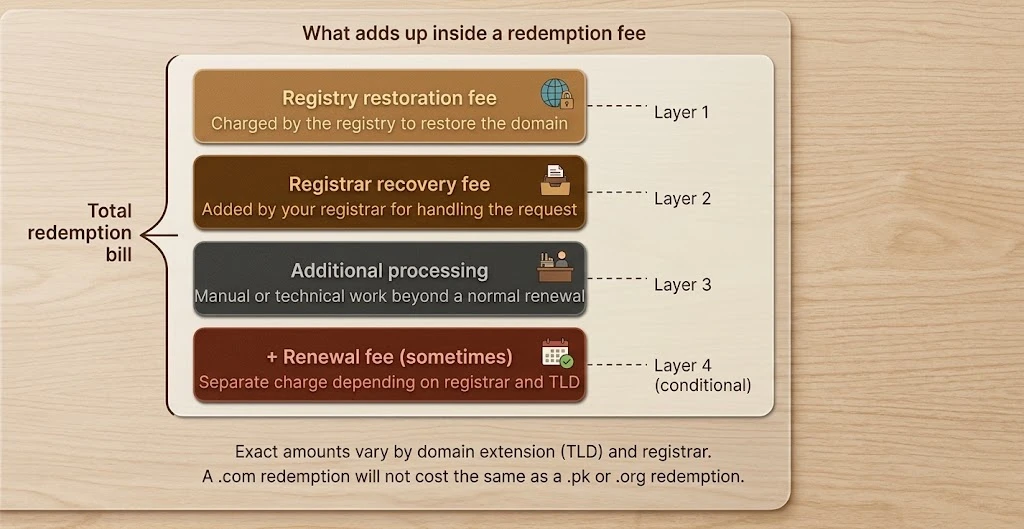
These are the main reasons the cost can be higher:
1) Registry Restoration Fee
The first cost can come from the domain registry itself.
A registry maintains the central database for a particular domain extension, while the registrar is the company you use to register and manage your domain.
Once a domain reaches redemption, the registrar has to request its restoration from the registry. This is different from extending an active domain for another year.
The registry may charge the registrar for this restoration, and that cost can be passed on to you as part of the redemption fee.
The amount isn’t the same for every domain. It depends on the domain extension and the registry responsible for it. So, a redemption price quoted for a .com domain shouldn’t be assumed to apply to .pk, .org, or another extension.
2) Registrar Recovery Fee
There can also be a fee from your registrar.
Someone has to submit and process the restoration request, and the registrar may charge for handling that recovery process. The fee can cover administrative work, technical processing, and communication with the registry.
This is why two registrars can quote different prices for recovering a domain with the same extension.
For generic top-level domains covered by ICANN’s policies, registrars are required to disclose their renewal, post-expiration renewal, and redemption or restoration fees.
Checking these charges before you register a domain can save you from an unpleasant surprise later.
3) Additional Manual Processing
A normal renewal is usually a routine transaction. You click renew, make the payment, and the domain continues working.
Redemption can require more work.
The domain has already moved into a special status, so the registrar may need to handle a restoration request rather than simply extend the existing registration.
Depending on the registrar’s systems and procedures, this can involve additional technical or administrative intervention. That extra work contributes to the overall recovery cost.
The important thing to remember is that this does not necessarily appear as a separate “manual processing” charge on your invoice. It can simply be built into the registrar’s redemption or restoration fee.
4) You May Still Have to Pay the Renewal Fee
This is where the final bill can become confusing.
A redemption fee isn’t necessarily the complete cost of getting your domain back for another year. Depending on the registrar and domain extension, the restoration charge and the normal renewal fee may be separate.
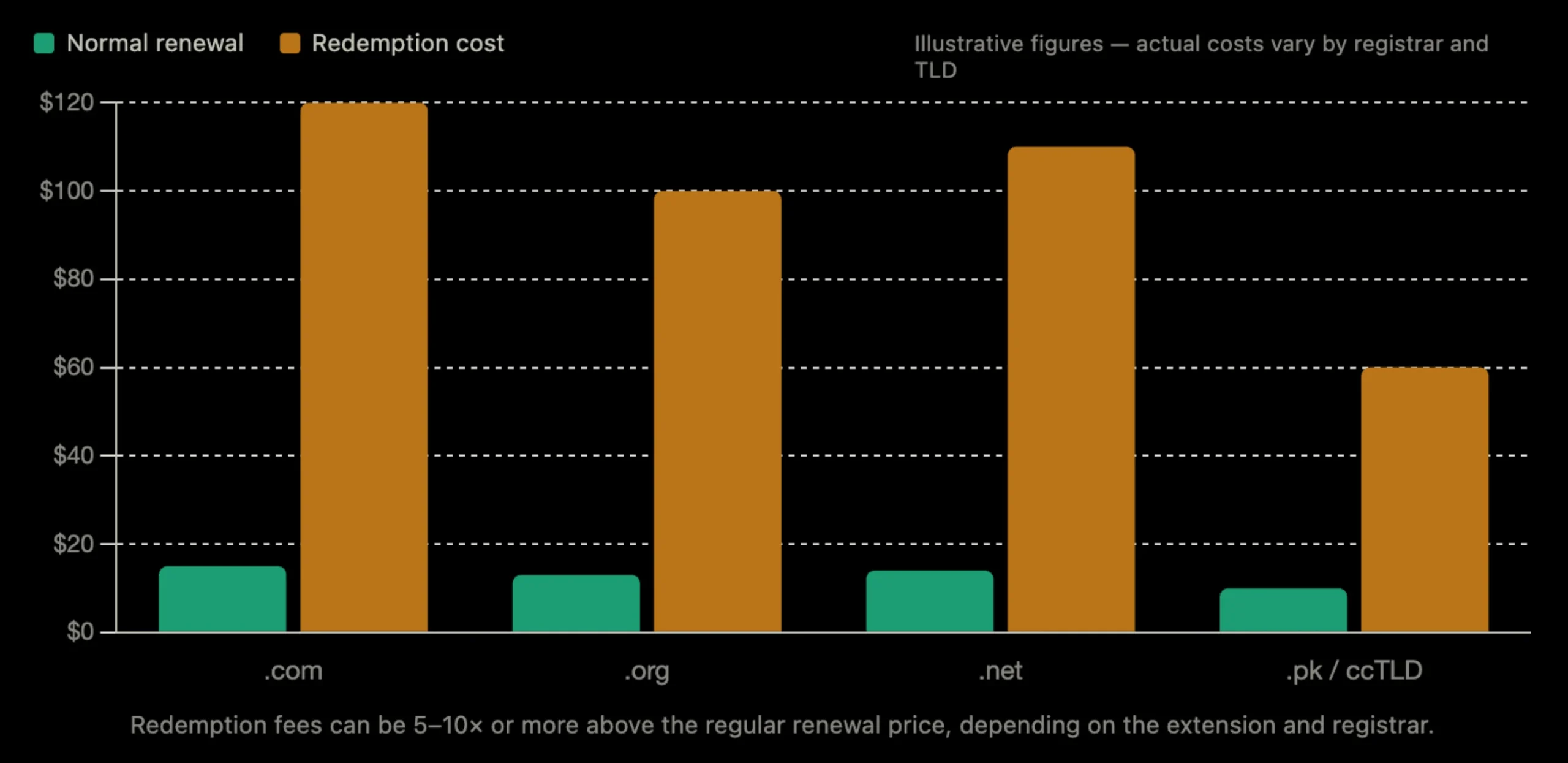
Your total cost could therefore look something like this:
Restoration fee + renewal fee = total amount to recover and renew the domain
That is why a domain that normally costs a modest amount to renew can suddenly cost several times more after entering redemption.
Before making the payment, check what the quoted redemption price includes. You don’t want to assume the restoration fee covers another year of registration if the renewal charge is billed separately.
5) The Domain Is Being Recovered, Not Simply Registered
This is perhaps the simplest way to understand the price difference.
Registering an available domain is simple and direct. You search for the name, see that it is available, pay the registration price, and register it.
A domain in redemption is different.
It has already passed its ordinary renewal stage and is being held for possible recovery by its previous registrant. The previous owner still has an opportunity to restore it during the applicable redemption period.
So you’re not paying to claim an available domain. You’re paying for a recovery process that gives the existing registrant a chance to get the domain back.
This also means that someone looking at another person’s expired domain cannot simply pay its redemption fee and take ownership. Redemption is for the previous registrant to recover the domain.
Why Can’t You Just Pay the Normal Domain Registration Price?
Because a domain in redemption isn’t available for normal registration yet.
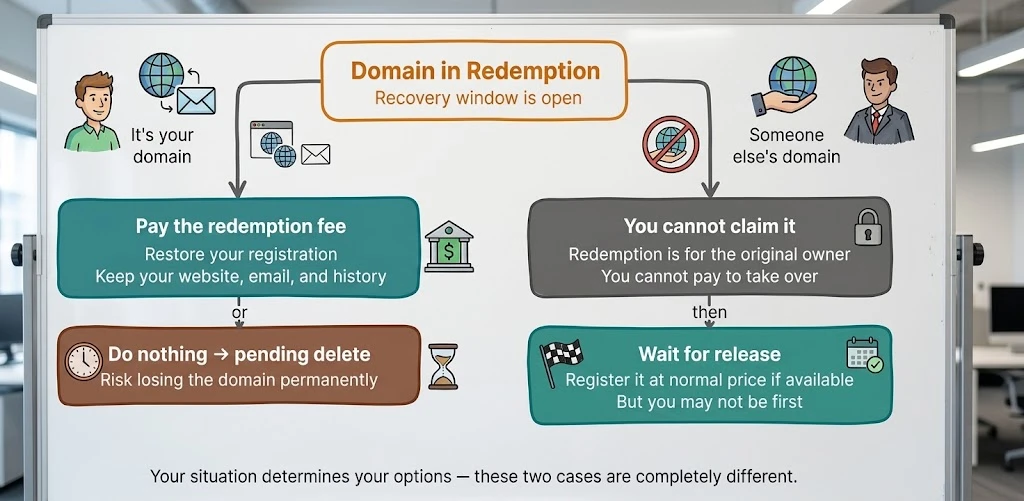
A normal registration happens after a domain has been released and is available for someone new to register.
A domain in redemption is still in its recovery lifecycle. The previous registrant may still restore it, so the domain isn’t open to the public at the standard registration price.
For generic top-level domains covered by ICANN’s policies, the Redemption Grace Period lasts 30 days after deletion.
If the previous registrant doesn’t restore the domain during that period, it moves toward Pending Delete before eventually being released according to the applicable registry rules.
So there are two very different situations:
- Your domain is in redemption: you’re trying to recover something you already own.
- Someone else’s domain is in redemption: you generally have to wait for it to be released before you can try to register it.
That’s why you can’t simply choose the normal registration price while the domain is still in redemption.
What Happens If You Don’t Pay the Redemption Fee?
If the previous registrant doesn’t restore the domain, it moves to the next stage of the deletion process.
For generic TLDs covered by ICANN’s policy, the domain moves from the Redemption Grace Period into Pending Delete. This stage lasts several days before the domain is purged from the registry.
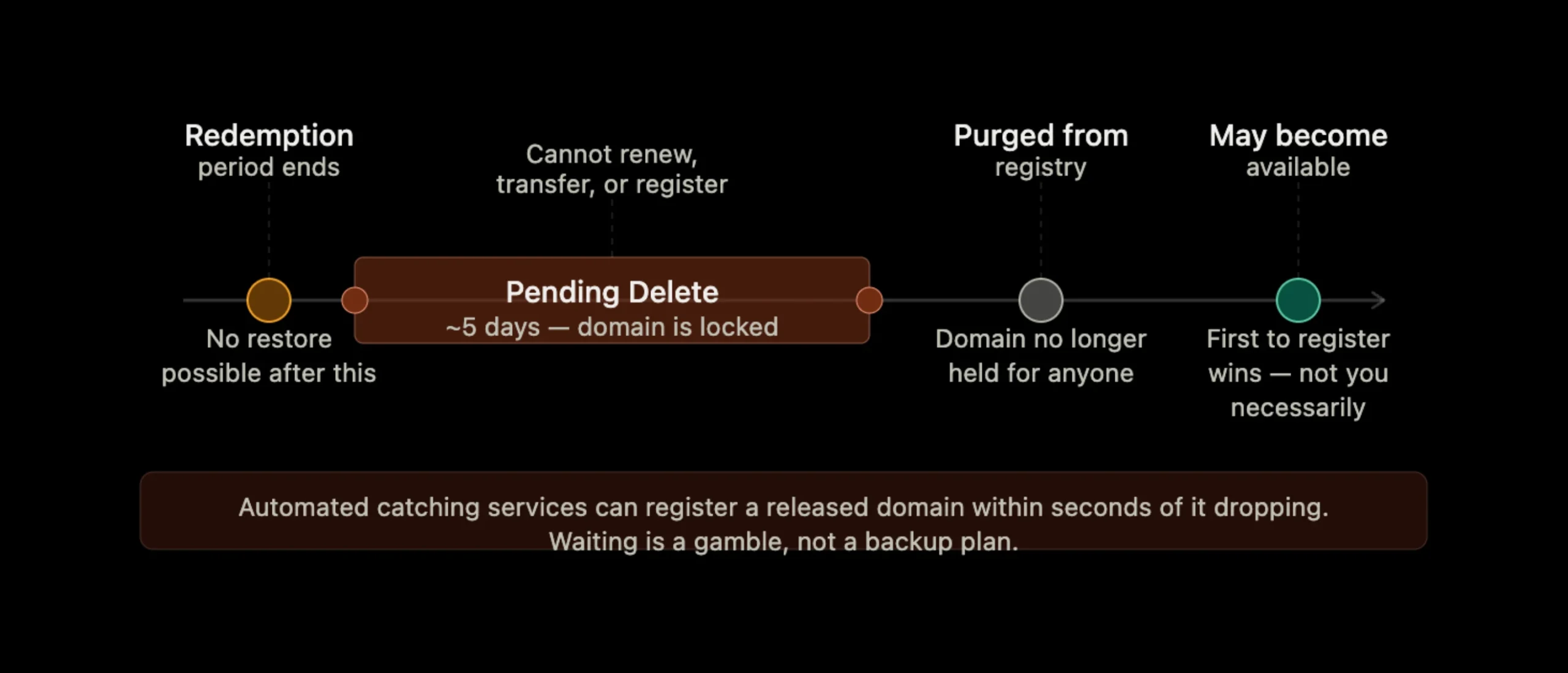
Once the deletion process is complete, the domain can become available for a new registration.
But there is an important catch.
The domain becoming available doesn’t mean it is reserved for you.
If the domain has a valuable name, another person may register it as soon as it is released. Some expired domains can also attract automated domain-catching services that attempt to register them immediately after release.
So waiting can remove the redemption fee, but it also creates a real risk of losing the domain.
Is Waiting Cheaper Than Paying the Redemption Fee?
Waiting can be cheaper if you’re trying to acquire someone else’s expired domain because, once released, it can generally be registered at the normal rate.
The trade-off is that you may not get it.
If it’s your own domain, the decision is different. Paying the higher recovery fee may be worth it if the domain is connected to your website, business email, advertising, customer communications, or established online presence.
Losing an established domain can create costs that go far beyond the redemption fee. You may need to change email addresses, move your website, update marketing materials, tell customers about the new address, and deal with links pointing to the old domain.
For someone else’s domain, you generally can’t recover it during redemption. Your option is to monitor it and try to register it once it is released.
Just don’t assume you’ll be the first person waiting when that happens.
Do All Domains Have the Same Redemption Fees and Timeline?
No. Redemption fees and timelines aren’t universal.
They can vary based on:
- Domain extension or TLD
- Registry
- Registrar
- Restoration policy
- Renewal requirements
For example, the rules that apply to a .com domain shouldn’t automatically be applied to a .pk domain.
Generic TLDs covered by ICANN’s Expired Registration Recovery Policy have a 30-day Redemption Grace Period, but individual domain extensions can have their own registry rules and processes.
The fees can also differ between registrars.
If you’re registering a domain in Pakistan, you can choose local extensions such as .pk, .com.pk, .org.pk, and .net.pk, as well as international extensions such as .com, .org, and .net.
How to Avoid Paying High Domain Redemption Fees
The easiest redemption fee to deal with is the one you never have to pay.
If you own a domain that is important to your business or personal project, a few simple habits can help you avoid getting to the redemption stage.
1. Renew before the expiry date. Don’t wait until the last day to renew an important domain.
2. Turn on auto-renewal. If your registrar offers it, enable auto-renewal for domains you plan to keep.
3. Keep your payment details updated. An expired card or failed payment can stop auto-renewal from working.
4. Monitor your expiry dates. Keep a record of your important domains and their renewal dates instead of relying entirely on memory.
5. Keep your registrar account accessible. Make sure you can still access the account that manages your domain and that the contact email is one you regularly check.
6. Register important domains early. If you’ve settled on a business name and the matching domain is available, securing it now is much easier than trying to recover it after expiration.
If you’re looking for a new domain in Pakistan, we offer a wide range of local and international extensions through Truehost.
You can search for your preferred domain name, check its availability, and register it before it ever gets close to the redemption stage.
Don’t wait for a domain to expire and hope you can recover it later. If the name you want is available, registering it now gives you control over the domain without the additional recovery costs that can come with redemption.