 Domain SearchInstantly check and register your perfect .pk or international domain
 Web HostingGet a .pk domain for as low as PKR 467
 cPanel HostingUser-friendly hosting powered by cPanel
 Reseller HostingLaunch your own hosting business with minimal technical requirements
 Windows HostingOptimized for Windows-based applications and websites
 Affiliate ProgramEarn referral commissions by promoting our services
 WordPress HostingFast & Reliable WordPress Hosting
 Domain TransferMigrate your existing domain seamlessly with zero downtime.
 All DomainsAccess 324+ top-level domains (TLDs) worldwide from a single platform
 Whois LookupIdentify the owner of any domain using our whois and rdap lookup tool
 Managed VPS Hosting
 AI Website BuilderCreate beautiful websites effortlessly using intuitive drag-and-drop features
 Online ShopLaunch a professional online shop with no technical skills required
 BlogDiscover expert guides on hosting, websites, SEO, and digital growth strategies
 ContactGet instant assistance via live chat or email
 SupportAccess help articles, tutorials, and service documentation
 SSL CertificatesEncrypt data, build trust, and boost SEO.
Your domain name is more than the address people type into their browser. It can help people understand what your business does, remember your brand, and find the right page on your website without a second thought.
For years, businesses mostly stuck to extensions like .com, .net, and .org. Today, there’s a much wider range of domain extensions that let you build shorter, more descriptive web addresses built around what you actually do.
This article walks through practical ways to use these newer extensions for websites, campaigns, landing pages, products, online communities, and other brand assets, so you can build a more consistent and memorable presence online. One thing worth saying upfront: a new extension won’t automatically boost your SEO or hand you more customers on its own. Its real value is in branding and clarity.
Ready to see what fits your brand? Start by browsing domain registration options for your name, then work through the ideas below to find the extension that actually says something about your business.
Creative Ways to Use New Domains to Boost Your Brand
1. Build a Short, Memorable Brand Domain
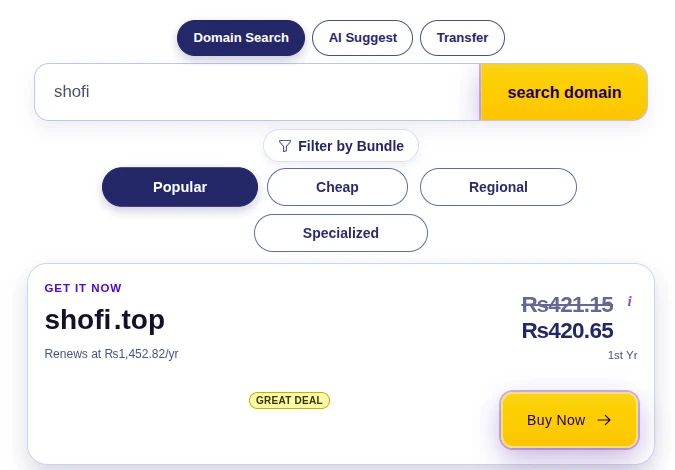
You’ve probably spent time trying to find a short .com that actually fits your business, only to discover someone else registered it years ago. That doesn’t mean your options have run out.
brand.shop, brand.design, or brand.tech can all give you a shorter, cleaner web address than a crowded .com search ever would. A short domain is easier to remember, type, and say out loud. Choose the extension because it fits your brand, not simply because it’s new and available.
2. Create a Dedicated Online Store
Extensions like .shop or .store give an ecommerce business an identity that’s obvious at a glance. Think brand.shop, fashionbrand.store, or localproducts.shop.
This works well for online retailers, fashion brands, handmade businesses, food businesses, and other product-based sellers. Whatever you pick, the domain itself should make the purpose of the website obvious before anyone reads a word of copy. If you’re weighing up options, running a domain search will show you what’s actually available for your brand name across these extensions.
3. Build Campaign-Specific Landing Pages
A separate domain built around a single campaign, like summerdeals.shop, launch2026.online, or newcollection.store, gives that campaign its own identity apart from your main site.
This suits product launches, seasonal promotions, competitions, events, and special offers particularly well. You can either redirect the campaign domain straight to a landing page on your main site, or run it as its own small dedicated website for the duration of the campaign.
4. Create Product-Specific Websites
If your business has multiple products or product lines, a dedicated domain for one of them can make sense, particularly for a major product launch, a new service, a subscription product, a digital product, or a standalone collection.
That said, a full separate domain isn’t always necessary. Sometimes a well-built page or subdirectory on your main website does the same job with far less overhead to manage.
5. Give Different Parts of Your Business Their Own Identity
Businesses with distinct departments or service lines can use descriptive extensions to make that distinction clear. brand.design, brand.agency, or brand.events each communicate a specific function at a glance.
This doesn’t mean every department needs its own domain. Use it where a business unit genuinely operates as its own identity, not as a way to multiply your domain portfolio for its own sake.
6. Build a Memorable Portfolio or Personal Brand
Freelancers, creatives, consultants, and other professionals can use these extensions to build a distinctive personal brand: .design for designers, .photography for photographers, .studio for creative professionals, .agency for agencies, and .consulting for consultants.
The extension itself reinforces what you do before a visitor reads a single word on the homepage.
7. Create a Dedicated Blog or Content Hub
A .blog domain can work well for a company blog, an industry publication, a resource centre, educational content, or thought leadership pieces that deserve their own space. Whatever platform you build it on, make sure your website hosting can comfortably support the extra site alongside your main one.
Just make sure the separate content domain has a clear purpose of its own. It shouldn’t end up duplicating content that already lives on your main website.
8. Build an Online Community
Extensions built around community, membership, or events can support customer communities, professional groups, membership platforms, and discussion spaces. The domain should reflect the identity of that community rather than simply mirroring your main brand name.
9. Use a New Domain for a Memorable Call to Action
Short domains work well offline too. brand.shop, brand.sale, or brand.events are easy to say out loud on a billboard, a radio spot, packaging, or a business card. A shorter domain is simply easier for someone to remember and type in later.
10. Protect Your Brand With Relevant Domains
Registering a handful of related domains, whether that’s a common misspelling, a relevant extension, a product name, or a brand variation, can help protect your identity from being used elsewhere. If you’re consolidating several of these under one account, checking your domain transfer options makes managing renewals and DNS far simpler in the long run.
Just be careful not to register domains for their own sake. A pile of unused domains without a clear purpose is just an ongoing cost with nothing behind it.
11. Try Domain Hacking for a Punchy Branded URL
Domain hacking simply means combining your brand name with the extension itself so the whole thing reads as one word or a short phrase. Think blo.gy or instagr.am. Done well, it turns a plain web address into something people actually remember and repeat.
This works particularly well when you already have a name in mind for a launch or a campaign. A new smartwatch could live at getsmart.watch instead of a longer, more generic .com address. A limited-time sale could run from summersale.discount for the duration of the promotion. A community push could point people to something as direct as jointhe.club.
These short, hacked domains also earn their keep offline. They’re easy to print cleanly on a billboard, a flyer, or a business card, and easy enough to remember that someone can type it into their phone from memory rather than needing to scan a code. The same logic applies to a social media bio, where a short, punchy link says more in less space than a generic shortened URL ever could. Try combining your own brand name with a few different extensions and see what actually reads naturally out loud.
12. Use Dedicated Domains to Track Marketing Performance
A dedicated domain doesn’t have to host a full website of its own. You can point a catchy new domain straight at a specific page on your main site, which gives you a clean, memorable link for a specific push without building anything new.
Where this gets genuinely useful is attribution. Register a slightly different domain for each advertising channel, print ad, or partner promotion, and redirect each one to the same landing page. Checking which domain drove a visit tells you which channel is actually working, in a way that’s far easier to explain to a client or a colleague than a string of UTM parameters. It’s worth pairing this with proper campaign tracking in Google Analytics so the traffic data lines up with whichever domain sent it.
How to Choose the Right New Domain Extension for Your Brand
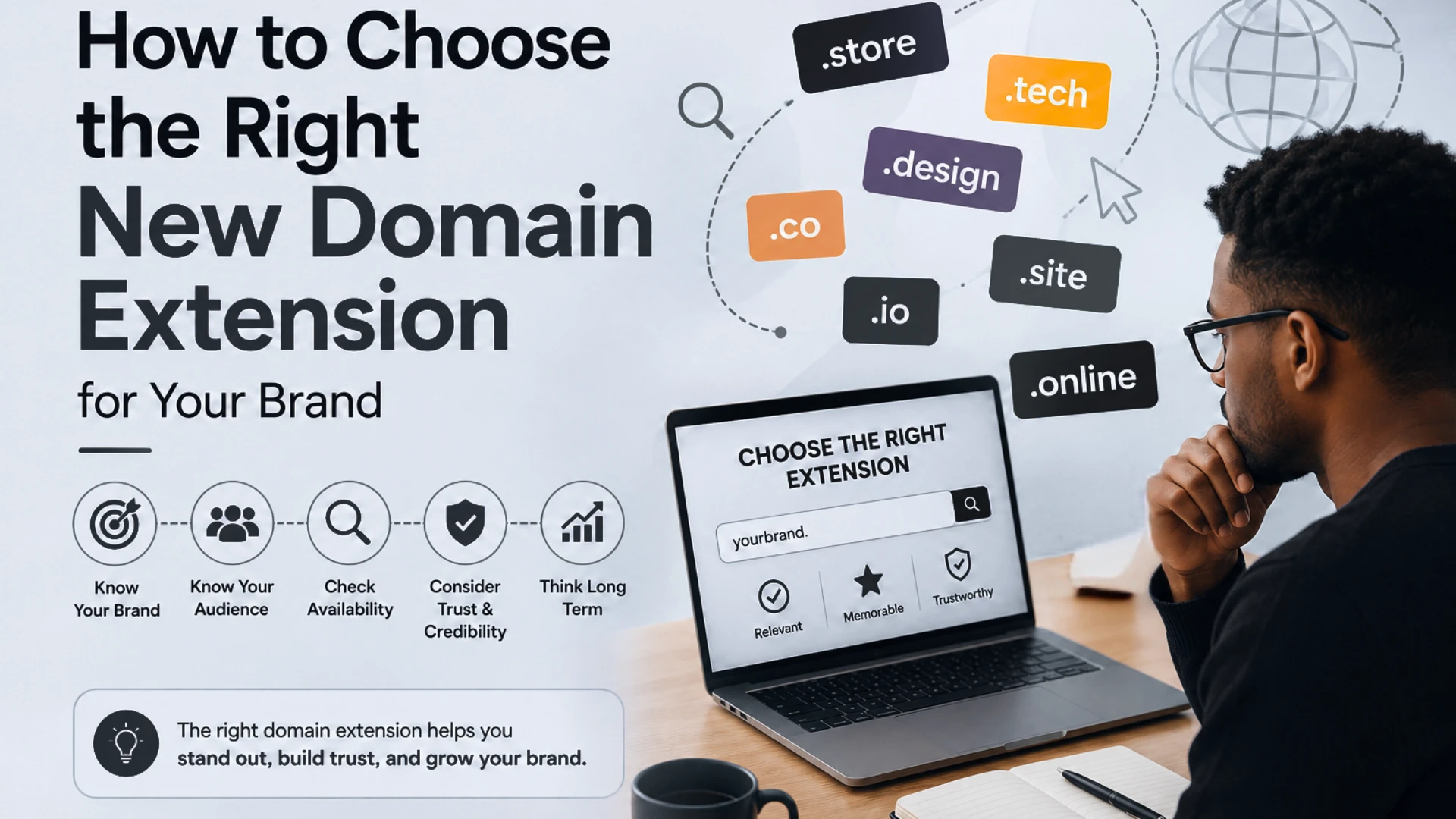
- Consider your business. Match the extension to what you actually do:
.shopfor ecommerce,.techfor technology businesses,.designfor designers,.agencyfor agencies,.onlinefor online services. - Consider your audience. The domain should be easy for your customers to understand and remember without explanation.
- Keep it short. Shorter domain names are generally easier to type, say, and share.
- Make it easy to spell. Avoid complicated words, unnecessary hyphens, and combinations that are easy to mistype.
- Think long term. A domain should still make sense once the business has grown well past where it is today.
Common Mistakes to Avoid When Using New Domains
- Choosing an extension that doesn’t match your brand. The extension should make immediate sense next to your business, not just sound trendy.
- Making the domain too complicated. Long names, unnecessary hyphens, and tricky spelling all work against you.
- Buying too many domains. Registering a stack of domains without a real strategy behind them just adds unnecessary cost and admin.
- Using domains that confuse customers. If someone can’t guess what the domain represents, it’s working against you rather than for you.
- Forgetting to renew your domain. Keep your registration details and renewal settings current so you don’t lose a domain you’re actively using.
FAQs
What Are New Domain Extensions?
New domain extensions, often called new gTLDs, are the extensions introduced beyond the traditional handful like .com, .net, and .org. A few examples:
.shop.store.online.tech.agency.design.website.blog.cloud.live
These extensions can make a domain far more descriptive. Compare brandname.com with brandname.shop. The second one tells a visitor exactly what to expect before they even click. Which option fits best depends entirely on your business, your audience, and what you actually plan to use the domain for.
Do new domain extensions help with SEO?
Using a new domain extension doesn’t automatically improve your search rankings. Rankings depend on a mix of factors including your content, relevance to the search query, technical performance, backlinks, and overall user experience, none of which are affected by the extension itself. Google’s own SEO starter guide covers what actually moves the needle if you want to dig deeper.
Are new domain extensions safe to use for a business?
Legitimate new domain extensions are perfectly safe to use for a business. Stick to reputable extensions and register through a reliable, accredited registrar so your registration and renewal details stay properly protected.
How much do new domains cost?
Pricing varies quite a bit depending on the extension, the registrar, your registration period, and the renewal price once the first term ends. It’s worth checking the renewal cost alongside the first-year price before you commit, since some extensions renew noticeably higher than their introductory rate.
Why Should Brands Consider New Domains?
There are a handful of practical reasons to look past the traditional extensions:
- More naming options when your ideal
.comis already taken - Shorter domain names that are easier to type and share
- Clearer brand positioning
- More descriptive web addresses
- Dedicated domains for specific campaigns
- Dedicated domains for specific products
- New opportunities to enter a niche cleanly
- Better alignment between your domain and your actual industry
The real value here sits in branding, clarity, and availability, not in some automatic SEO advantage. Keep that expectation in mind as you read through the ideas below.
Ready to Change Your Domain Name?
A creative domain gives your brand a clearer, more memorable identity online. Instead of just hunting for whatever’s available, choose a domain that actually supports what you want customers to understand about your business the moment they see it.
A quick recap of what that can look like in practice:
- Build a memorable brand domain.
- Create a dedicated online store.
- Launch marketing campaigns on their own domain.
- Promote individual products or product lines.
- Build a professional portfolio.
- Create a content hub.
- Build an online community.
- Support your offline marketing.
- Protect your brand with related domains.
- Try a domain hack for a punchier URL.
- Track which channels are actually driving traffic.
Whichever direction fits your business, set up matching business email so your new address feels complete from day one, right alongside whichever domain you settle on.